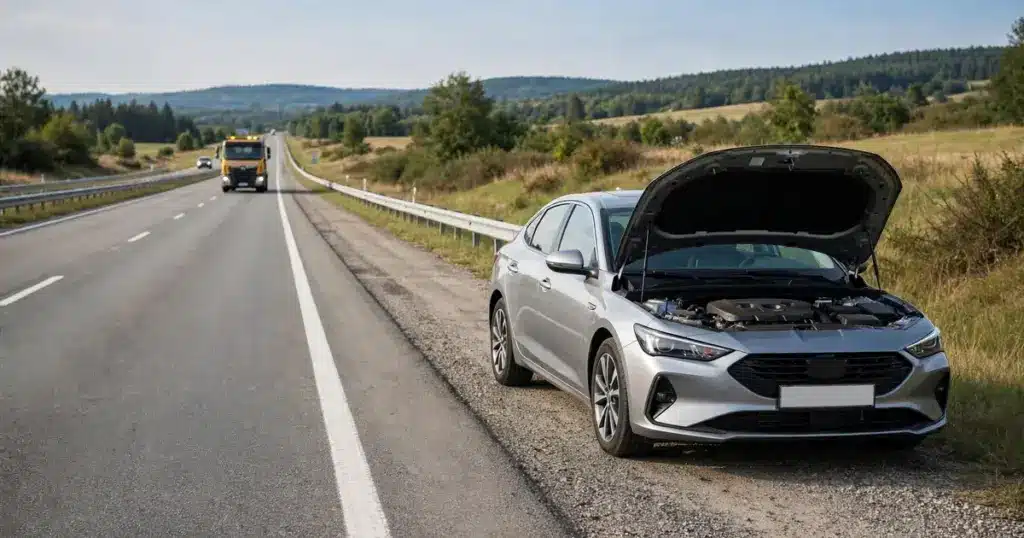
Roadside assistance coverage is an optional add-on to your car insurance policy that pays for emergency help when your vehicle breaks down. If you get a flat tire, run out of gas, lock your keys in the car, or need a tow, this coverage pays a service provider to come help you at the roadside. This guide explains what roadside assistance coverage includes, what it leaves out, how it works in practice, and how to decide whether it is worth adding to your policy.
What Is Roadside Assistance Coverage?
Roadside assistance coverage, sometimes called towing and labor coverage, is an optional part of a car insurance policy that pays for emergency services when your vehicle becomes disabled. It is not the same as collision or comprehensive coverage, which pay for damage to your car. Instead, roadside assistance pays for the service of getting you going again: a tow truck, a jump start, a tire change, or a locksmith.
Roadside assistance coverage is an optional add-on that pays for emergency help when your vehicle breaks down. It is available on both basic and broad car insurance policies, because it is a separate add-on rather than a level of coverage.
One important detail: roadside assistance generally follows the car, not the driver. If you lend your car to a friend and it breaks down, the service typically applies because the disabled vehicle is the one listed on your policy.
What Does Roadside Assistance Cover?
Coverage varies by insurer, but most roadside assistance add-ons include the same core services. Here is what you can usually count on:
- Towing: if your car cannot be driven, it is towed to a nearby repair shop. Policies set a maximum distance, such as 15 or 25 miles; beyond that you may pay the difference per mile.
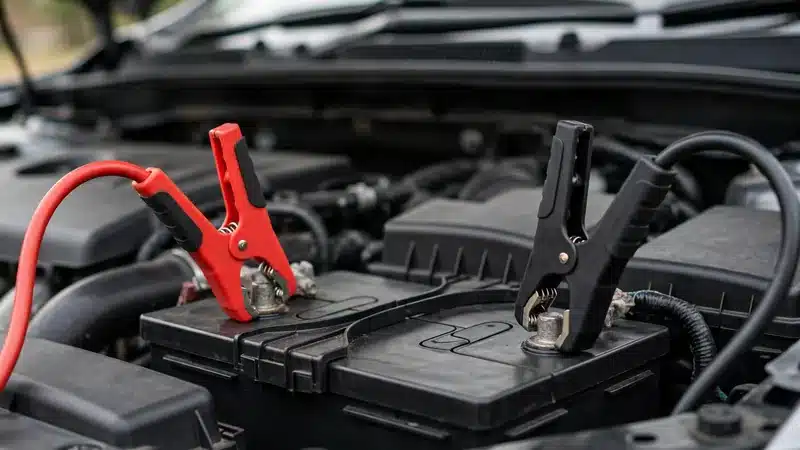
- Jump starts: a dead battery gets a jump so you can drive to get the battery tested or replaced.
- Flat-tire changes: the service provider installs your spare tire. The coverage pays for the labor, not for a new tire.
- Lockout service: if you lock your keys in the car, a locksmith is sent to open it.
- Fuel delivery: if you run out of gas, enough fuel is delivered to get you to the nearest station. You usually pay for the fuel itself; the delivery is covered.
- Winching: if your car is stuck in mud, snow, or a ditch close to the road, a winch pulls it out.
Some policies also cover minor on-site repairs, such as a simple fix that can be done at the roadside. Each insurer sets a per-incident dollar limit for these services, and most limit the number of service calls you can make per policy term, often around three or four.
What It Does Not Cover
Roadside assistance is a convenience benefit, not a repair policy. Knowing its boundaries avoids surprises:
- Repair costs: it pays for the tow or the jump start, not for fixing what broke. A new alternator, a new tire, or engine repairs are your expense (or a claim under another coverage if the damage is covered).
- Accident towing: towing after a collision is usually handled under your collision coverage, not roadside assistance. Some insurers allow roadside assistance for accident tows, but the standard design is for mechanical breakdowns.
- Breakdowns from neglect: a few policies exclude service calls caused by a lack of basic maintenance, though this is not universal.
- Off-road recovery: if your vehicle is stuck far from a public road, winching coverage may not apply.
- Secondary tows: moving your car from one shop to another, or from a shop to your home, is generally not covered.
It also does not cover liability for damage you cause to others; it protects your schedule, not your legal or financial liability. For that, review the main types of car insurance protection to see how each part of a policy works.
How Roadside Assistance Works When You Need It
Using roadside assistance is straightforward. When your car breaks down, you call the claims or roadside number on your insurance card, or use your insurer’s app if it offers roadside dispatch. You tell them where you are, what happened, and what vehicle needs help.
The insurer’s dispatch service contacts a nearby contracted provider, such as a local tow company, and sends it to you. You typically do not pay the provider for the covered portion of the service; the insurer pays them directly, or you pay and submit a receipt for reimbursement up to your policy’s limits. Keep receipts and note the time and location, since reimbursement claims go more smoothly with documentation.
Response times and availability
Most insurers offer 24-hour dispatch, every day of the year. How long you wait depends on where you are: in a city, help may arrive within the hour, while on a remote highway it can take longer. Your insurer’s network size matters, so if you drive in rural areas often, ask how dispatch works outside major metro areas before you buy.
Reimbursement limits
Every policy states a maximum it will pay per service call or tow. If the tow you need costs more than the limit, you pay the difference. Check these limits on your declarations page before you need the service.
Insurance Roadside Assistance vs. Motor Club Memberships
Roadside assistance through your insurer is not the only option. Motor clubs and some automakers offer similar services. Here is how the main choices compare:
| Feature | Insurer add-on | Motor club membership |
|---|---|---|
| How you buy it | Added to your car insurance policy | Separate annual membership |
| What it follows | Usually the insured vehicle | Usually the member, in any car |
| Typical cost | Small addition to your premium per term | Higher annual fee |
| Service call limits | Often 3 to 4 calls per term | Often more generous allowances |
| Extras | None beyond the listed services | May include trip discounts, travel planning |
Neither option is wrong. If you want the lowest cost and only need occasional help with your own car, the insurer add-on is usually enough. Compare the towing distance and call limits, since those are the details that matter most in a real emergency.
How Much Does Roadside Assistance Cost?
As an insurance add-on, roadside assistance is one of the cheapest extras you can buy: a small addition to your premium per policy term, and it rarely changes your overall rate by much. One tow at market rates can cost several times what the add-on costs for an entire term.
Drivers with newer cars under a manufacturer roadside plan may not need both, since the factory plan may already cover the early years of ownership.
Should You Add Roadside Assistance to Your Policy?
Roadside assistance makes the most sense if any of these describe you:
- You drive a car with more than 75,000 miles or one that is out of its factory roadside plan.
- You commute on highways or through rural areas where a breakdown would leave you stranded.
- If a surprise tow bill would strain your budget, the small premium is a worthwhile safety net.
- You share your car with family members, since the coverage typically follows the vehicle.
You may be able to skip it if your car is new and covered by a manufacturer plan, you rarely drive, or you already carry a motor club membership that duplicates the benefit. Even then, compare the add-on’s cost against a single tow; many drivers keep both because the insurance add-on is so inexpensive.
When you are reviewing your options, it helps to see how this add-on sits alongside the rest of your policy. Reading about what comprehensive coverage covers and liability versus full coverage gives you that full picture.
Frequently Asked Questions
Is roadside assistance worth it?
For most drivers, yes. The add-on costs a small amount per policy term, while a single out-of-pocket tow can cost several times more. If you drive an older car or travel long distances, it is one of the best-value extras in car insurance.
How many times can I use roadside assistance in a year?
Most policies limit you to a set number of service calls per policy term, commonly three or four. After you use them up, additional calls are your expense until the policy renews. Check your declarations page for your exact limit.
Does roadside assistance cover someone else driving my car?
Usually, yes. Roadside assistance typically follows the insured vehicle, not the named driver, so a friend or family member you allowed to drive your car can generally use the service. Confirm this in your own policy documents.
Does using roadside assistance raise my insurance rates?
Roadside assistance calls are service requests, not accident claims, so they do not affect your rates the way an at-fault claim would. That said, some insurers track frequent use, so check your policy terms if you expect to call often.
Can I add roadside assistance in the middle of my policy term?
Most insurers let you add it at any time, not just at renewal. It usually takes effect quickly, sometimes the same day. Call your insurer or add it through your online account.
What to Do Next
Pull up your current policy’s declarations page and check whether roadside assistance is already included. If it is not, ask your insurer for a quote to add it and compare the towing distance and call limits against a motor club alternative. While you are reviewing, it is a good time to revisit what your car insurance covers overall and make sure the rest of your coverage still fits how you drive today.
This article is for general educational purposes only and is not insurance, legal, or financial advice. Coverage rules and rates vary by state and insurer.