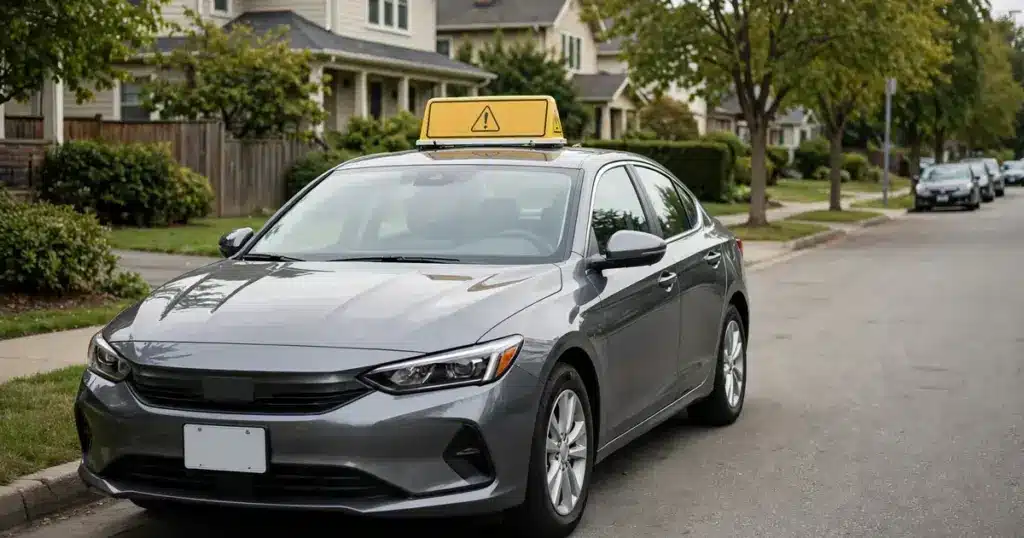
A good student discount can lower car insurance premiums for drivers who keep strong grades, making it one of the most valuable discounts available to young drivers. Most insurers offer it to full-time students who maintain a B average or better, and it applies whether the student is on a parent’s policy or has their own.
This guide explains who qualifies, how much the discount is worth in general terms, how to apply, and how to keep it — plus how it stacks with other young-driver discounts.
What the Good Student Discount Is
The good student discount is a rate reduction insurers give to young drivers who are doing well in school. The idea behind it is straightforward: insurers have found that students who keep their grades up tend to file fewer claims, so they reward that behavior with lower premiums.
It is available from most major insurers and typically applies to high school and college students. The discount is applied to the portion of the premium tied to the student driver — on a family policy, that means the surcharge your teen added to the bill gets reduced. If your teen is not yet insured in your household, our parent’s guide to car insurance for teen drivers explains how adding them to your policy works and what it costs.
Who Qualifies
Qualifying rules vary by insurer and state, but the pattern is consistent:
- Full-time enrollment. The student must be enrolled full-time in high school, college, or an accredited equivalent like homeschool programs that meet state requirements.
- A B average or better. Most insurers set the bar at a B average (roughly a 3.0 GPA) or being in the top 20% of the class. Some accept a dean’s list or honor roll notation instead of a specific GPA.
- Age limits. The discount is generally available to drivers up to age 25, which covers high schoolers, college students, and young adults finishing graduate school.
- Listed on the policy. The student must be a rated driver on the policy — either on their own policy or listed on a parent’s.
College students away from home usually still qualify as long as they are enrolled full-time. If your student is away at school without a car, pair this discount with the distant-student discount many insurers offer — our guide on college students on a parent’s car insurance policy explains how the two fit together.
How Much It Saves
No two insurers price the discount exactly the same way, and the dollar value depends on the student’s base premium. In general terms, the good student discount is one of the largest single discounts available to young drivers — bigger than paperless billing or paid-in-full discounts, and comparable to multi-policy stacking.
On a family policy, the savings apply to the coverage tied to the student. On a standalone student policy, it applies to the whole premium. Either way, it is worth the paperwork: families routinely leave this discount unclaimed for months or years simply because they never submitted grades.
One caution: the discount lowers the rate, but it does not change the underlying risk pricing. A teen with a ticket or accident will still see a surcharge — the good student discount just softens it. If your young driver gets a ticket, see our guide on car insurance for 18-year-old drivers for how violations affect young-driver rates.
How to Apply: Step by Step
Applying takes a few minutes once you have proof of grades in hand. Here is the process:
- Check the requirements. Call your insurer or agent and confirm the GPA cutoff and acceptable proof — most take a report card, transcript, or a school-completed form.
- Get proof of grades. A recent report card or transcript works. Some insurers provide their own form for a school official to sign.
- Submit it. Upload through the insurer’s app or website, email it to your agent, or bring it to a local office. Ask for written confirmation that the discount was applied and on which renewal date it takes effect.
- Check the bill. Confirm the discount appears on the next billing statement. If it does not, follow up — paperwork sometimes stalls between the agent and the underwriting system.
Timing matters. If your teen just finished a strong semester, apply right away rather than waiting for renewal — many insurers apply the discount mid-policy-term once proof is received.
Keeping the Discount Year After Year
The good student discount is not permanent. Insurers re-verify eligibility, usually once per school year. Here is how to keep it:
- Set a yearly reminder. When grades come out each year, submit updated proof before the insurer asks.
- Know what happens if grades slip. If the GPA drops below the cutoff, the discount usually falls off at the next renewal. It can be reinstated once grades recover and you submit new proof.
- Watch the age cutoff. Around age 25 the discount ages out. By then, a clean driving record should be doing the heavy lifting — our guide to how new drivers build insurance history explains how continuous coverage keeps rates falling after graduation.
- Enrollment changes matter. Dropping to part-time status, taking a gap year, or leaving school can end eligibility. Check with your insurer before making changes if the discount is significant.
Stacking It With Other Young-Driver Discounts
The good student discount rarely travels alone. These discounts commonly stack with it:
| Discount | What it requires | Stacks with good student? |
|---|---|---|
| Defensive driving course | Completion of an approved course | Usually yes |
| Driver’s education | Formal driver’s ed beyond the permit test | Usually yes |
| Telematics / usage-based | App or device tracking safe driving habits | Usually yes |
| Student away at school | Attending school 100+ miles away without a car | Usually yes |
| Multi-car / bundling | Multiple vehicles or policies with one insurer | Yes, on family policies |
When you call your insurer about the good student discount, ask for a full discount review at the same time. Agents can often spot two or three discounts a family is missing — paid-in-full, paperless, and multi-policy are the most common ones left on the table.
Frequently Asked Questions
What GPA do you need for a good student discount?
Most insurers require a B average, roughly a 3.0 GPA, or ranking in the top 20% of the class. Some accept honor roll or dean’s list status instead of a specific number. Check your insurer’s exact cutoff before applying.
Does the good student discount apply on a parent’s policy?
Yes. When a student is listed on a parent’s policy, the discount reduces the portion of the premium tied to that student. This is the most common setup, since adding a teen to the family policy is usually cheaper than a standalone policy.
How long does the good student discount last?
It typically lasts through age 25, as long as the student stays enrolled full-time and keeps qualifying grades. Insurers usually re-verify eligibility once per school year.
Do homeschooled students qualify?
Often, yes. Insurers that accept homeschool students usually require standardized test scores or another form of academic documentation showing the equivalent of a B average. Ask your insurer what proof they accept.
What happens if my student’s grades drop?
The discount generally comes off at the next renewal after grades fall below the cutoff. It can be reinstated by submitting new proof once grades are back up — so it is worth reapplying rather than giving up on it.
What to Do Next
Pull up your student’s latest report card and call your insurer or agent this week — it is the highest-return five minutes in young-driver insurance. Then make sure the rest of the policy is working for you: read our parent’s guide to car insurance for teen drivers for coverage choices and timing, and the guide to building insurance history so your student keeps rates dropping long after graduation.
This article is for general educational purposes only and is not insurance, legal, or financial advice. Coverage rules and rates vary by state and insurer.