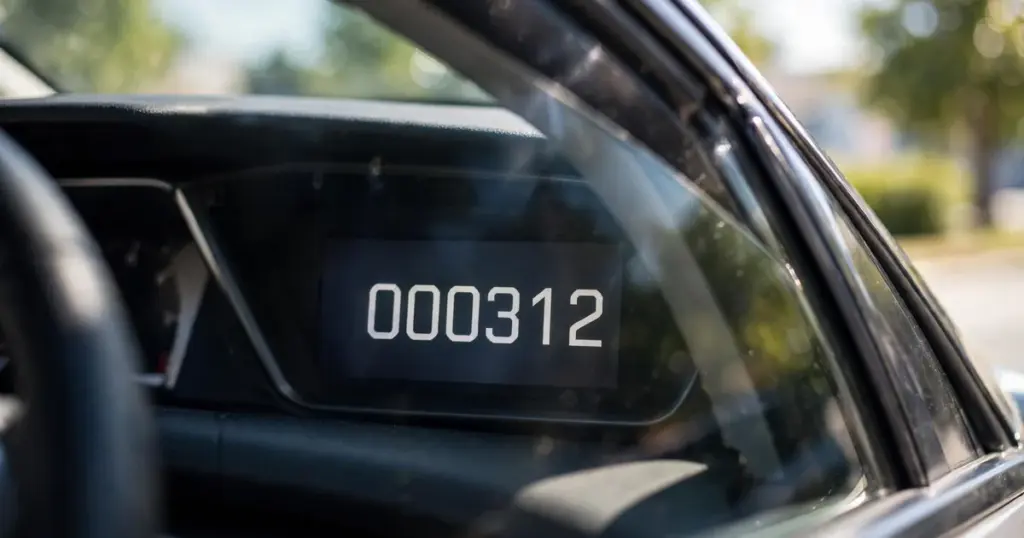
Pay-per-mile car insurance is worth considering if you drive noticeably less than the average driver — roughly under a few hundred miles a month, though the exact break-even point depends on the insurer. Instead of charging a flat premium, it combines a low base rate with a per-mile charge, so light drivers pay less than they would on a traditional policy. It is a good fit for remote workers, retirees, students, city dwellers who mostly use transit, and anyone with a second car that rarely leaves the garage.
How Pay-Per-Mile Car Insurance Works
Traditional car insurance charges you a fixed premium for the policy term, estimated partly on how much you say you drive. Pay-per-mile car insurance flips the model: your mileage is measured, and your bill reflects how much you actually drove. The less you drive, the less you pay.
At its core, the coverage itself is ordinary car insurance. A pay-per-mile policy still includes the same coverage types — liability, collision, comprehensive, and any extras you choose. The difference is entirely in the pricing. You are covered whenever you drive; the meter just keeps count of how far you go.
Policies usually cap the mileage you are billed for per day. That matters for road trips: even if you drive several hundred miles in one day, most programs only charge for a set maximum per day, so occasional long drives do not blow up your bill.
The Cost Structure: Base Rate Plus Per-Mile Rate
A pay-per-mile bill has two parts:
- A base rate. A flat monthly amount that keeps your coverage active whether you drive or not. It reflects your fixed risk factors — driving record, vehicle, location, coverage limits.
- A per-mile rate. A charge for each mile driven, applied to your measured mileage for the month.
Your total is the base rate plus miles times the per-mile rate (subject to any daily cap). Because the base rate is typically lower than a comparable traditional premium, light drivers come out ahead. As your miles climb, the per-mile charges add up, and at some point a traditional policy becomes cheaper. That crossover point differs by insurer, which is why comparing real quotes — not rules of thumb — is essential.
Pay-Per-Mile vs. Traditional Car Insurance
Here is how the two models compare side by side:
| Feature | Pay-per-mile | Traditional |
|---|---|---|
| How the price is set | Base rate + charge per mile driven | Fixed premium per policy term |
| Best suited for | Low-mileage drivers | Average to high-mileage drivers |
| Mileage tracking | Required (device, app, or car telematics) | Usually self-reported |
| Other price factors | Driving record, vehicle, location still apply | Same |
| Road trips | Daily mileage caps limit the hit | No effect on price |
| When it saves money | When your driving stays consistently light | When mileage is high or unpredictable |

Who Should Consider It
Pay-per-mile pricing rewards a light footprint behind the wheel. It is most often a good fit for:
- Remote workers and freelancers. If your commute is a walk to the desk, your car may sit parked most weekdays. That is the classic pay-per-mile customer.
- Retirees and part-time workers. Errands and social trips add up to far fewer miles than a daily commute.
- City residents who use transit. If you mainly take the train or bus and keep a car for weekends, your annual mileage may be a fraction of the average.
- Students. Many students drive mostly on breaks and weekends, and budgets are tight — both reasons to price insurance by the mile.
- Second-car households. If one vehicle is the daily driver and the other leaves the garage rarely, the low-use car is a strong candidate for per-mile pricing.
- Seasonal drivers. Cars stored for part of the year rack up months of near-zero mileage; per-mile pricing reflects that reality.
If you already benefit from low-mileage car insurance discounts on a traditional policy, compare those savings against a pay-per-mile quote. Sometimes the discount on a standard policy beats per-mile pricing — sometimes it does not. Only side-by-side quotes tell you.
Who Should Skip It
Pay-per-mile insurance is not for everyone. Think twice if any of these describe you:
- You commute long distances. Daily highway commutes pile up miles fast, and the per-mile charges will usually exceed a traditional premium.
- You drive for work or gigs. Delivery, rideshare, and sales routes mean heavy mileage — and note that personal policies often exclude commercial use anyway, so you may need different coverage entirely.
- Your mileage is unpredictable. If some months are quiet and others involve cross-country driving, the bill swings with it. Drivers who prefer a stable, predictable premium may dislike the variability.
- You are uncomfortable with tracking. Measured mileage means a device or app connected to your car. If that bothers you, a traditional policy avoids the question.
- You already get a great traditional rate. A clean record, a safe car, and a full set of discounts can produce a traditional premium that per-mile pricing cannot beat, especially if your driving is light but not extremely light.
How Your Mileage Is Tracked
Insurers measure your miles in one of three ways, and the method affects what data they see:
- Plug-in device. A small device that connects to your car’s diagnostic port and reports mileage (and sometimes driving behavior like hard braking). It is the most common method.
- Mobile app. Your phone’s sensors track trips. Convenient, but battery use and phone changes can complicate things.
- Built-in car telematics. Some newer cars share odometer data directly with the insurer through the manufacturer’s connected-car system — no extra hardware needed.
Before enrolling, read the privacy policy carefully. Find out exactly what is collected (miles only, or also location, time of day, and driving behavior?), how long it is kept, and whether it can be shared or sold. Programs that track only odometer readings are the least invasive; programs that track behavior may adjust your rate based on how you drive, which is a different product than pure pay-per-mile pricing.
Trade-Offs to Know Before You Sign Up
The bill varies month to month
Your premium moves with your driving. That is the point — but it also means budgeting is less predictable than a fixed premium. Look at a full year of your driving, not just a quiet month, when you estimate costs.
Not every state or insurer offers it
Availability is patchy. Some insurers offer pay-per-mile only in certain states, and program rules differ. If you cannot find a competitive option where you live, the traditional ways to save on car insurance — higher deductibles, discounts, shopping around — still apply.
Coverage limits still matter
Do not let the pricing model distract you from coverage quality. A cheap per-mile rate means nothing if the liability limits are too low to protect your assets. Compare policies with identical coverage levels, or the price comparison is meaningless.
Pair it with other savings
Pay-per-mile pricing is one lever, not the whole strategy. You can usually combine it with a higher deductible, safe-driver habits, and good credit where allowed — and check how you pay for your coverage, since paying in full can shave more off the same bill.
Frequently Asked Questions
How is pay-per-mile car insurance different from regular car insurance?
The coverage is the same — the pricing is different. Regular policies charge a fixed premium per term, while pay-per-mile policies combine a low base rate with a charge for each mile you actually drive, measured by a device, app, or your car’s telematics.
How do insurers know how many miles I drive?
Through a plug-in device connected to your car’s diagnostic port, a mobile app that tracks trips, or built-in telematics from your car’s manufacturer. You choose the method the insurer offers when you enroll.
Is pay-per-mile car insurance available in every state?
No. Availability varies by state and insurer — some programs operate in only a handful of states. Check with insurers directly or get quotes online to see what is offered where you live.
What happens if I drive more miles than I expected?
You simply pay for the extra miles at your per-mile rate. Most programs cap billable miles per day, so one long road trip will not wreck your budget, but consistently high mileage can make the policy more expensive than a traditional one.
Does pay-per-mile insurance track where I drive?
It depends on the program. Some track only odometer readings; others collect location, time of day, and driving behavior. Read the insurer’s privacy policy before enrolling so you know exactly what data leaves your car.
What to Do Next
If your car spends more time parked than moving, pay-per-mile car insurance deserves a quote — but never switch on a hunch. Track your actual monthly mileage for a month or two, get pay-per-mile quotes and traditional quotes at identical coverage levels, and compare the totals. To understand everything else that shapes the price you see, read our complete guide to car insurance premiums.
This article is for general educational purposes only and is not insurance, legal, or financial advice. Coverage rules and rates vary by state and insurer.