If you drive far fewer miles than the average American, you may be paying for risk you never take on. A low mileage car insurance discount lowers your premium when you put relatively few miles on your car each year — typically because you work from home, live close to your job, take public transit, or keep a second car mostly parked. Insurers offer it because fewer miles on the road means fewer chances of a crash.
Not every insurer offers this discount, and the mileage cutoff differs from one company to the next. This guide explains how low-mileage discounts work, how insurers verify your miles, and how to claim the savings you are already owed.
What a low-mileage discount is
Car insurance pricing is largely about exposure: the more time your car spends on the road, the more opportunities for a collision. A low mileage car insurance discount is a price break on a traditional policy for drivers whose annual mileage falls below a threshold set by their insurer. You still buy the same policy — liability, collision, comprehensive — but you pay less for it because your expected risk is lower.
Where it shows up on your policy matters. Most insurers apply it as a line item on your declarations page, so you can check whether you are already receiving it. Many drivers qualify without knowing the discount exists and simply never asked.
How insurers decide the mileage cutoff
There is no single national standard for “low mileage.” Each insurer sets its own annual mileage cutoff, and some use tiers — a bigger discount for very low mileage and a smaller one for moderately low mileage. The cutoff tends to sit below the national average for annual driving.
What matters is not the exact number on every company’s chart but how you compare against your own insurer’s definition. The same driver could qualify for the full discount with one insurer and miss it with another. That makes the mileage question worth asking every time you shop for car insurance quotes, because the discount is easy to overlook.
Why mileage is tied to your premium
Your premium reflects how likely you are to file a claim and how large that claim might be. Miles driven is one of the most direct measures of crash exposure an insurer can use: it is simple, objective, and hard to argue with. A car that sits in a garage five days a week is exposed to far less risk than one driven on the highway twice daily.
This is the same logic behind our guide on what makes up your car insurance premium — mileage is one of several rating factors, and it is one of the few you can genuinely reduce.
How your miles get verified
Insurers do not take your word for mileage on a handshake; they check. The verification method depends on the company and whether the discount is self-reported or telematics-based:
- Self-reported estimates. You state your annual mileage on the application or at renewal. Some insurers accept this at face value and spot-check later.
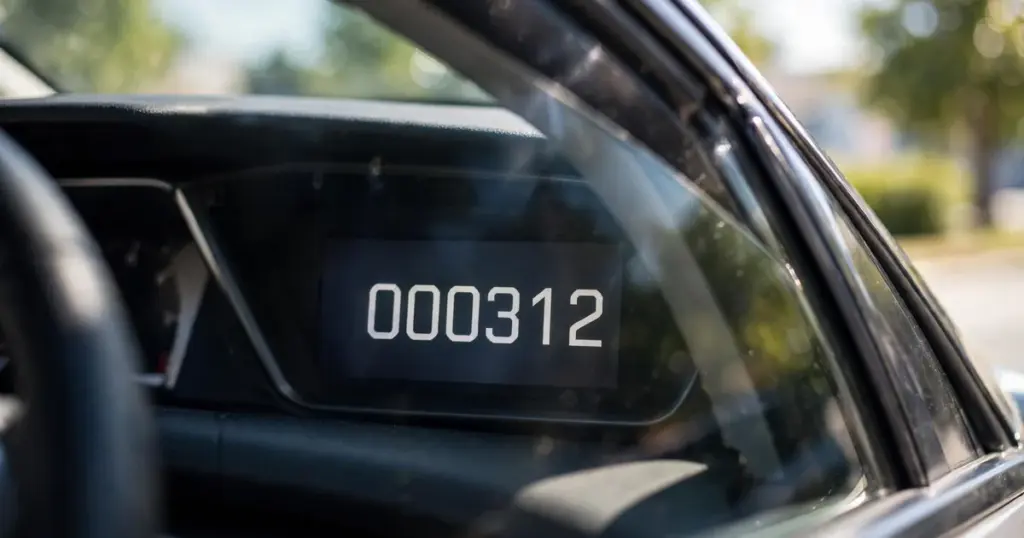
- Odometer readings. An insurer may ask for a current odometer photo, or compare readings recorded at policy inception and renewal to calculate actual miles driven.
- Service and inspection records. Mileage recorded during oil changes, state inspections, or dealer service visits can be cross-referenced with what you reported.
- Telematics programs. If you enroll in an insurer’s driving app or plug-in device, your miles are measured automatically — this is also how usage-based programs verify distance.
Being honest matters. Underreporting mileage to get a discount can create problems at claim time if your actual use looks very different from what is on your policy. Small differences rarely matter, but a policy that says “pleasure use, 4,000 miles a year” on a car that is clearly commuting daily can trigger questions. Read our full guide to car insurance discounts for how this one fits alongside the others.
Who qualifies — and how to ask for it

The discount fits a recognizable set of drivers. If any of these describe you, you should be getting it or at least asking why not:
- Remote and hybrid workers. Losing the daily commute is the single biggest reason drivers drop under the mileage cutoff.
- Retirees. Driving mainly for errands and visits often puts annual mileage well under the threshold.
- Second-car owners. A car you drive only on weekends or road trips is a classic low-mileage candidate — but it must be listed correctly on your policy.
- City dwellers with transit. If the train does your commuting and the car handles groceries, your mileage may already qualify.
- College students away from home. A car parked at your parents’ house most of the year can qualify for reduced-use pricing; ask your insurer how they classify it.
How to claim the discount
Call or message your insurer and ask three questions: Do you offer a low-mileage discount? What is the annual mileage cutoff? How do I prove my mileage? Some companies apply it from your next renewal; others adjust mid-term. If you recently started working from home, say so directly — insurers update usage classifications all the time, but only when told.
If your current insurer does not offer the discount, it becomes one more factor when you decide when to shop for car insurance. It is worth including in your comparison, alongside the rest of the savings strategies in our guide to saving on car insurance.
Low-mileage discount vs. pay-per-mile vs. telematics
Low-mileage drivers have three main routes to savings. They are not interchangeable:
| Option | How it works | How mileage is checked | Best for | Watch out for |
|---|---|---|---|---|
| Low-mileage discount | Discount on a traditional policy | Self-report, odometer, or service records | Drivers who want a normal policy at a lower price | Discount disappears if your mileage creeps back up |
| Pay-per-mile insurance | Base rate plus a per-mile charge | Required tracking device or app | Very low-mileage drivers comfortable with tracking | Costs rise linearly if you drive more than expected |
| Usage-based (telematics) program | Discount or rate based on measured driving behavior | App or device measuring miles plus braking, speed, and time of day | Safe drivers willing to be monitored | Aggressive driving can reduce the discount |
See our full explainer on pay-per-mile car insurance to figure out which of the first two options fits your driving pattern. If you drive very little — a few thousand miles a year — pay-per-mile can beat a traditional policy even with the low-mileage discount. If you are moderately below average, the discount on a standard policy is usually simpler.
Mistakes that cost you the discount
- Never updating your usage after a lifestyle change. Switching to remote work without telling your insurer is the most common missed-discount story.
- Listing every car as a commuter. If your second car is pleasure-use, make sure the policy says so — default classifications often assume commuting.
- Guessing instead of checking the odometer. A quick photo of your odometer reading beats a guess and gives you proof if the insurer asks.
- Assuming the discount is automatic. Some insurers apply it proactively; many do not. Ask.
- Forgetting about it at renewal. Mileage estimates carry forward year after year. If yours is stale, your discount may be based on an old driving pattern.
Frequently Asked Questions
How many miles a year counts as “low mileage” for car insurance?
It depends on the insurer, since each company sets its own cutoff. Cutoffs commonly fall below the national average for annual driving, and some insurers use tiers with larger discounts for very low mileage. The only number that matters is your insurer’s — ask for it directly.
How do insurers verify how much I drive?
Common methods include self-reported mileage on your application, odometer readings submitted by photo or recorded at policy inception and renewal, mileage from service or inspection records, and automatic tracking if you enroll in a telematics program. Insurers may cross-check these sources.
Can I get a low-mileage discount if I work from home?
Usually yes — remote workers are among the most common qualifiers because losing the commute often cuts annual mileage dramatically. Tell your insurer your usage changed from commuting to pleasure use and ask them to update your mileage estimate at your next renewal, or mid-term if they allow it.
Is a low-mileage discount the same as pay-per-mile insurance?
No. A low-mileage discount is a price break on a traditional policy: you pay a standard premium minus the discount. Pay-per-mile insurance is a different pricing model entirely — a base rate plus a charge for each mile you drive, measured by a required tracking device or app.
Will a low-mileage discount lower my premium if I have tickets on my record?
It can still reduce what you pay, because the discount applies to your premium regardless of your driving record. It will not erase the surcharge from tickets or accidents, though. Both factors apply — the surcharge raises the base rate, and the discount lowers it from there.
What to Do Next
Check your current declarations page to see whether a low-mileage discount is already applied. If it is not — and you drive less than you used to — contact your insurer with an odometer reading and ask for a usage review. Then put the discount in context: revisit how your premium is calculated and the mistakes to avoid when getting quotes so the next renewal reflects the driver you actually are.
This article is for general educational purposes only and is not insurance, legal, or financial advice. Coverage rules and rates vary by state and insurer.