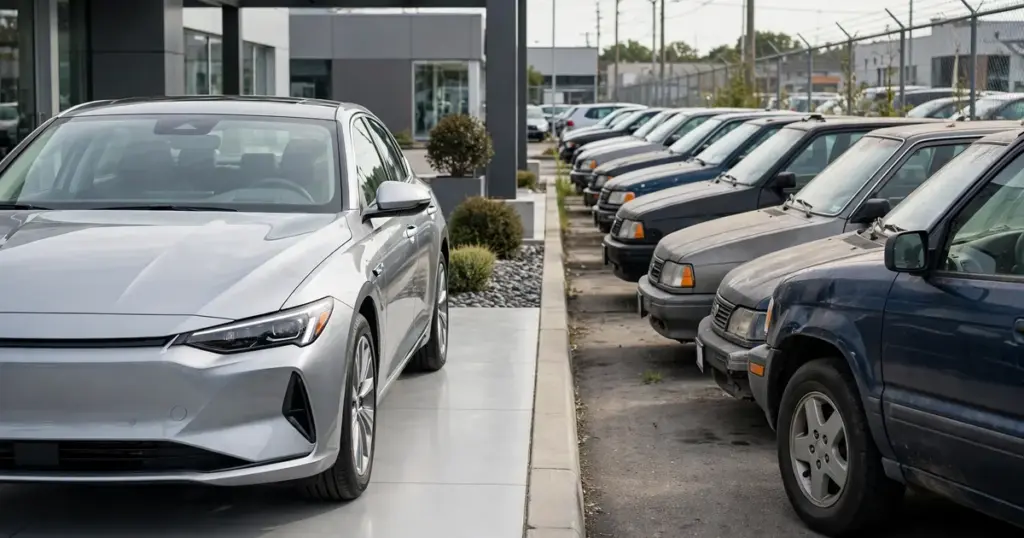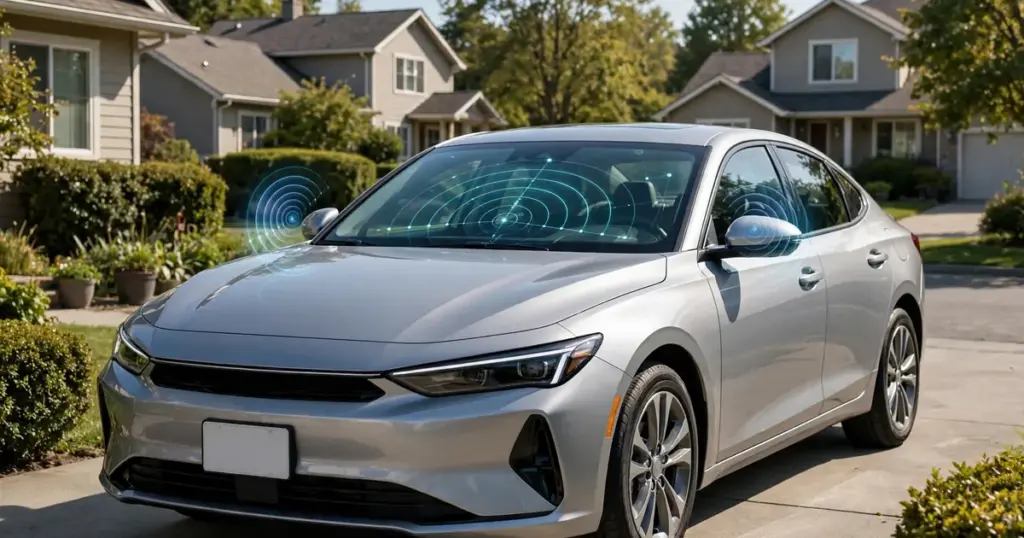

If you are wondering how to protect your car from theft, the good news is that a handful of simple habits and affordable devices can make your vehicle a far less appealing target. Thieves tend to look for the easiest opportunity, so small barriers — good lighting, locked doors, and a visible anti-theft device — push them toward someone else’s car.
This guide covers the practical steps every driver can take: what to do every time you park, the devices and technology worth buying, how to protect your key fob from relay attacks, and what your insurance covers if the worst happens.
Start with the basics: lock, hide, and take
The most common mistake drivers make is also the easiest to fix: leaving the car unlocked. A large share of vehicle break-ins involve unlocked doors, so locking up every single time — even in your own driveway — is the single most effective habit you can build.
Make it a routine
- Lock every door and close every window and sunroof, even for a two-minute stop.
- Take your keys with you. Never leave a spare key hidden in or around the car — thieves know all the hiding spots.
- Remove valuables or hide them. Bags, electronics, chargers, and even loose change visible through the window invite a smashed window. Put items in the trunk before you arrive, not after you park.
- Take your documents out of the glove box. Your registration and insurance card contain your home address. Carry copies on your phone or in your wallet instead.
- Never leave the car running unattended while it warms up or during a quick errand.
Park smart wherever you go
Where you park matters as much as how you lock up. Thieves prefer darkness, isolation, and quick escape routes. Choosing well-lit, busy parking spots raises the risk of being seen and lowers the appeal of your car.
- Choose well-lit areas near building entrances, under streetlights, or within view of security cameras.
- Use your garage at home if you have one — and lock the car inside it anyway.
- Park close to activity. Near store entrances, in attended lots, or on busy streets rather than dark side streets.
- Turn your wheels toward the curb and set the parking brake on hills, which also makes flatbed towing harder.
- Be cautious at trailheads, rest stops, and overnight street parking, where thieves know cars sit unattended for hours.
Anti-theft devices worth considering
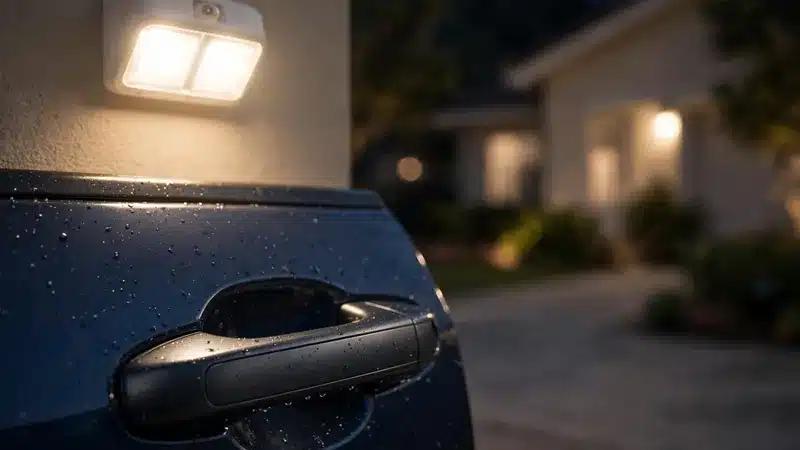
No device makes a car theft-proof, but each layer of protection costs the thief time and attention — the two things they want to avoid. Layering a few affordable options is more effective than relying on one expensive gadget.
| Device | What it does | Typical cost range | Best for |
|---|---|---|---|
| Steering wheel lock | Visible metal bar that prevents the wheel from turning | Low | A strong visual deterrent for street parking |
| Audible alarm | Sounds a siren when doors, hood, or windows are disturbed | Moderate | Drawing attention in busy areas |
| GPS tracker | Shows your car’s location in real time on your phone | Low to moderate | Recovering the vehicle after a theft |
| Kill switch | Hidden switch that interrupts the starter or fuel system | Moderate | Stopping drive-away theft entirely |
| Wheel clamp or boot | Locks a wheel so the car cannot be rolled or towed easily | Low | Long-term parking or high-risk areas |
A steering wheel lock remains one of the best values: it is cheap, takes seconds to fit, and is instantly visible through the windshield. A car with strong safety features can also cost less to insure, so theft deterrents and safety equipment complement each other.
Protect against keyless entry theft
Many newer cars open automatically when the key fob is nearby, and thieves have learned to exploit that convenience. In a “relay attack,” one thief holds a signal booster near your front door while another stands by the car, tricking the car into thinking the fob is present.
- Store fobs in a Faraday pouch or metal box at home to block the radio signal completely.
- Keep fobs away from exterior walls and doors — the farther from the car, the weaker the signal to boost.
- Check if your car lets you disable keyless entry in the settings menu; some manufacturers offer this.
- Look for fobs with motion-sensor sleep modes when buying a replacement — they go dormant when not moving.
Use technology to your advantage
Beyond the basics, a few tech tools can help you watch over your car:
- GPS trackers — plug-in or hardwired units report the car’s location to your phone and can alert you to unexpected movement. If the car is stolen, share the live location with police rather than chasing it yourself.
- Dash cameras with parking mode — record motion or impacts while parked, giving you evidence and sometimes a license plate to hand to police.
- Factory telematics apps — many automakers’ apps can show your car’s location, lock or unlock doors remotely, and alert you if an alarm triggers.
- Smart home cameras — a doorbell or driveway camera covering your parking spot deters thieves and captures evidence.
How insurance fits into theft protection
Physical precautions reduce your chance of becoming a victim; insurance covers the financial damage if one fails. The coverage that matters for theft is comprehensive coverage, an optional add-on that pays for damage from theft, vandalism, weather, and animal strikes.
- Comprehensive coverage pays for a stolen vehicle (minus your deductible) and for repairs if a thief damages your car during a break-in.
- Liability-only policies do not cover theft of your own car — that coverage only pays for damage you cause to others.
- Adding comprehensive is often worth it if your car has real value and you park in higher-risk areas.
For a deeper explanation of what each part of a policy actually pays for, see our guide to what car insurance covers. And timing matters: shopping when insurers compete for business can lower your bill — the best time of year to buy car insurance walks through the calendar.
What to do if your car is stolen
If your car disappears, act quickly — fast reporting dramatically improves the odds of recovery.
- Confirm it was stolen — check that it was not towed or moved by a family member.
- Call the police and file a report with your car’s make, model, color, year, license plate, and VIN.
- Share tracker data with the police if you have a GPS unit installed.
- Call your insurer to start a claim under your comprehensive coverage.
- Notify your lender if you have a loan, since they have a financial interest in the vehicle.
Frequently Asked Questions
Does car insurance cover a stolen car?
Yes, if you carry comprehensive coverage. It pays the actual cash value of a stolen vehicle, minus your deductible. Liability-only policies do not cover theft of your own car.
Will installing anti-theft devices lower my insurance premium?
Some insurers offer small discounts for factory or aftermarket anti-theft systems such as alarms, GPS trackers, or immobilizers. Ask your insurer which devices qualify, since the discount and eligible equipment vary by company and state.
What is the most effective way to protect my car from theft?
A combination works best: always lock up and remove valuables, park in well-lit areas, and add a visible deterrent like a steering wheel lock. For newer cars, a Faraday pouch for the key fob protects against relay attacks.
Should I leave my car unlocked to avoid a smashed window?
No. An unlocked car is far easier to steal entirely, and thieves will still search it. Locking up and removing valuables is the safer choice.
Do I need to report an attempted break-in to my insurer?
If there is damage you want repaired under your policy, yes — file a police report first, then call your insurer. Compare the repair cost to your deductible before filing, since a small claim may not be worth it.
What to Do Next
Start tonight: lock up, hide valuables, and park under light. This weekend, pick up a steering wheel lock and a Faraday pouch if you have keyless entry — both are inexpensive and take minutes to use. While you are at it, review whether your policy includes comprehensive coverage, and consider a defensive driving course, which can sharpen your habits behind the wheel and may earn you a discount.
This article is for general educational purposes only and is not insurance, legal, or financial advice. Coverage rules and rates vary by state and insurer.