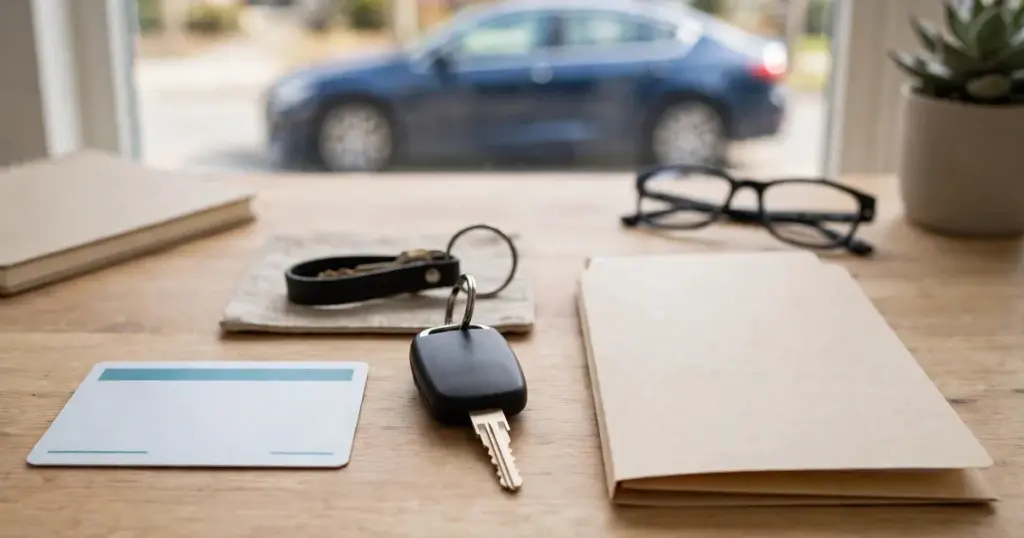
Before you ask for a car insurance quote, gather your driver’s license, your car’s VIN and mileage, your current policy’s coverage limits, and your driving history. This car insurance quote checklist takes about 15 minutes to complete — and it is the difference between quotes you can trust and numbers that fall apart when you try to buy. Prepared shoppers get faster, more accurate prices and avoid the re-quoting dance that happens when details change mid-application.
Why Being Prepared Changes Your Quote
A quote is only as good as the information behind it. When you guess at your mileage, forget a ticket, or leave a household driver off the application, the price you see is a placeholder — the real number shows up later, usually higher, after the insurer verifies your records. That verification always happens before a policy is issued, so fudging details never saves money; it just wastes your time and erodes trust.
Your Personal Details Checklist
Every quote starts with who you are and who else drives your car. Have the following ready for yourself and every licensed driver in your household:
Identity and contact information
- Full legal name and date of birth for each driver
- Driver’s license numbers and the state that issued them
- Your garaging address — where the car is parked overnight, which is not always your mailing address
- Phone number and email for follow-up
Driving history
- Accidents in the last 3–5 years, with dates and whether they were your fault
- Tickets and violations in the last 3–5 years, with dates
- Any license suspensions and their dates
- How long each driver has been licensed
Be honest about the blemishes. Insurers pull motor vehicle reports on every quoted driver, so a ticket you “forget” will surface anyway — and the correction almost always raises the price. Disclosing it up front keeps the quote accurate from the start. If a past violation is dragging your rates up, it may also be worth looking into a defensive driving course discount once you are covered.
Your Vehicle Details Checklist
Insurers price the car itself — its value, repair costs, theft risk, and safety equipment. For each vehicle you want covered, gather:
- Year, make, model, and trim level
- The 17-character VIN (on the dashboard plate, the driver’s door jamb sticker, or your registration)
- Current odometer reading and your estimated annual mileage
- Whether you own, finance, or lease it — and the lender or leasing company if there is one
- How the car is used: commuting (and how far), business, pleasure, or rideshare
- Safety and anti-theft features: automatic emergency braking, lane assist, airbags, alarm, tracking device
- Any aftermarket modifications, which some insurers want to know about
The VIN matters more than most shoppers realize: it tells the insurer the exact trim, factory safety equipment, and theft profile, so a quote with the VIN is noticeably more accurate than one based on “2021 Honda Civic” alone. Safety equipment can also earn discounts, so list every feature rather than assuming the insurer already knows.
Your Current Coverage Details
If you already have insurance, your current policy is the single most useful document in the quoting process. Pull the declarations page (usually the first page of your policy packet or in your insurer’s app) and note:
- Your liability limits, and whether they are split limits or a combined single limit
- Collision and comprehensive deductibles
- Extras: uninsured/underinsured motorist, medical payments or PIP, rental reimbursement, roadside assistance
- Your current premium and renewal date
- How long you have been continuously insured, and with which company
Continuous coverage history is a rating factor in its own right — insurers view long, unbroken coverage as a sign of responsibility. Having your renewal date handy also lets you time the switch properly: buy the new policy first, then cancel the old one, so there is never a gap.
The Coverage Levels You Want Quoted
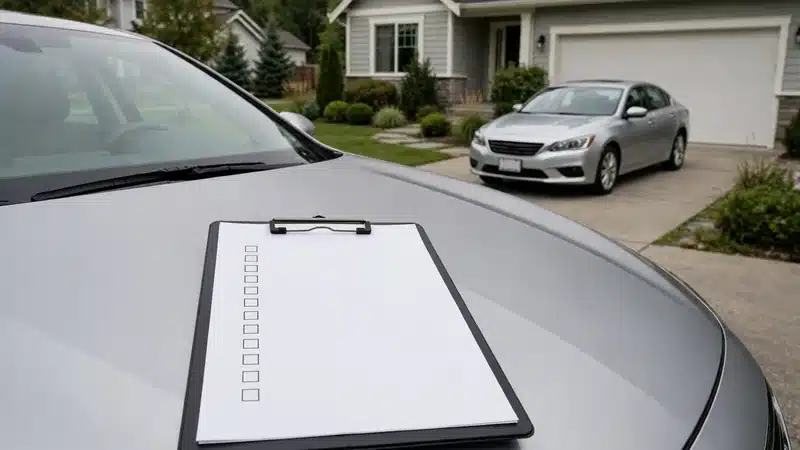
Here is the step most shoppers skip, and it is the one that matters most: decide what coverage you want before you ask for prices. If you let each insurer quote whatever defaults they prefer, you will get a pile of numbers that cannot be compared. Pick your target liability limits, your collision and comprehensive deductibles, and which extras you want, then ask every insurer for exactly that package.
If insurance terms feel like alphabet soup, skim a plain-language car insurance glossary first. You do not need to become an expert — you just need to know what liability, collision, comprehensive, and uninsured motorist coverage actually do, so you can choose limits deliberately instead of accepting defaults.
| Detail to have ready | Where to find it | Why insurers ask |
|---|---|---|
| Driver’s license numbers | Your wallet; each household driver’s license | To pull driving records for accurate pricing |
| VIN for each car | Dashboard plate, door jamb sticker, registration | Identifies exact trim, safety gear, and theft risk |
| Annual mileage | Odometer + estimate of yearly driving | Mileage is a direct rating factor |
| Current declarations page | Policy packet or insurer’s app | Sets a baseline to beat; shows coverage history |
| Garaging address | Where the car sleeps at night | Rates are priced by location |
| Desired limits and deductibles | Your decision, made before quoting | Makes every quote truly comparable |
Discounts to Bring Up Yourself
Quote systems do not always ask about every discount you might earn. Mention these yourself and let the insurer confirm eligibility:
- Multi-policy or bundling: insuring your car and home or renters policy with the same company.
- Multi-car: covering two or more vehicles on one policy.
- Good student: for young drivers with strong grades.
- Low mileage: if you drive less than average — have your odometer reading ready as proof.
- Safety features: automatic braking, lane-keeping, airbags, anti-theft devices.
- Paperless billing and automatic payments: small but easy discounts.
- Pay-in-full: paying the whole term at once instead of monthly, if your budget allows.
- Defensive driving course: in some states, a completed course earns a discount for a few years.
Always ask — the worst answer is “that doesn’t apply,” and the best is savings you would otherwise have missed.
Mistakes That Make Quotes Wrong
Leaving a household driver off. This is the most common and most expensive mistake. Insurers expect every licensed driver in the household to be listed or formally excluded. An unlisted teen driver discovered later can trigger a back-billed premium — or worse, a denied claim.
Guessing your mileage. “About average” is not a number. Check the odometer, do quick math on your commute, and give a real estimate. Understating mileage to chase a low-mileage discount backfires when the insurer’s records disagree.
Using the wrong address. Rating by garaging location means the address where the car actually sits matters — not a parent’s address, not a PO box. A wrong address can count as misrepresentation.
Comparing different coverage levels. A $90 quote with minimum liability and a $140 quote with strong protection are not two prices for the same thing. Standardize your coverage targets first, every time.
Forgetting the lender. If you finance or lease, the lender must be listed on the policy and will require full coverage — a liability-only quote for a financed car is useless.
What Happens After You Request the Quote
Once you submit your details, the insurer verifies them: motor vehicle reports for each driver, insurance history databases for prior coverage, and sometimes a credit-based insurance score where state law allows it. This is why accuracy up front matters — every discrepancy gets corrected, and corrections rarely move the price down.
When the quotes come back, slow down and read them. Compare the declarations side by side: limits, deductibles, listed drivers, discounts applied. Our guide on how to read an insurance quote shows what each section means and which details are worth questioning. If a price looks surprisingly low, check what was left out before you celebrate.
Frequently Asked Questions
What information do I need to get a car insurance quote?
At minimum: each driver’s name, birth date, and license number; each car’s year, make, model, and VIN; your garaging address; your driving history; and the coverage limits you want quoted. Your current policy’s declarations page covers most of this in one place.
Can I get a car insurance quote without a VIN?
Yes, you can get a rough estimate with just the year, make, and model. But the quote becomes meaningfully more accurate with the VIN, because it pins down the exact trim, factory safety equipment, and theft profile. Always add the VIN before you buy.
Do I have to list my teenager on my car insurance quote?
Generally yes — every licensed household driver must be listed on the policy or formally excluded in writing. Leaving a teen off can lead to back-billed premiums or a denied claim after an accident.
How long does it take to get a car insurance quote?
With your details organized, an online quote usually takes 10 to 20 minutes. Working with an agent takes longer but can surface discounts a website misses. The verification step — motor vehicle and insurance history reports — happens behind the scenes and rarely adds noticeable delay.
What to Do Next
Spend 15 minutes gathering everything on this checklist: licenses, VINs, odometer readings, and your current declarations page. Decide your target coverage levels before you start, then run the same details past several insurers. When the quotes arrive, read each one carefully with our guide to how to read an insurance quote, and time your purchase well — our guide to the best time to buy car insurance explains why shopping 30 to 45 days before renewal gets you better offers. For the bigger picture, our how to shop for car insurance guide ties the whole process together.
This article is for general educational purposes only and is not insurance, legal, or financial advice. Coverage rules and rates vary by state and insurer.