Wondering about the future of car insurance and what it means for you as a driver? The industry is already changing in visible ways: more cars report how they are driven, electric vehicles are becoming a normal sight on American roads, and driver-assistance features that were once luxury options are showing up in everyday models. This guide explains the trends that matter, in plain terms, without hype or crystal-ball promises.
Usage-based insurance and telematics
Telematics is the biggest shift already underway in how car insurance is priced. Instead of setting your rate mostly from your age, location, and driving history, a telematics or usage-based program measures how you actually drive — things like braking, acceleration, speed, the time of day you drive, and sometimes how often you use your phone behind the wheel.
Most programs work through a smartphone app or a small device that plugs into your car. After a trial period, your driving data produces a score, and safer driving earns a discount on your premium. The key point for drivers: this is voluntary. You opt in, and the programs are built around the idea that careful drivers should pay less than the average suggests.
There are trade-offs to weigh. You are sharing driving data with your insurer, so read the privacy terms and understand what is collected and how long it is kept. Some programs also adjust your rate in both directions, while others only offer discounts. Ask which kind you are signing up for before you start.
Electric vehicles and how insurers treat them
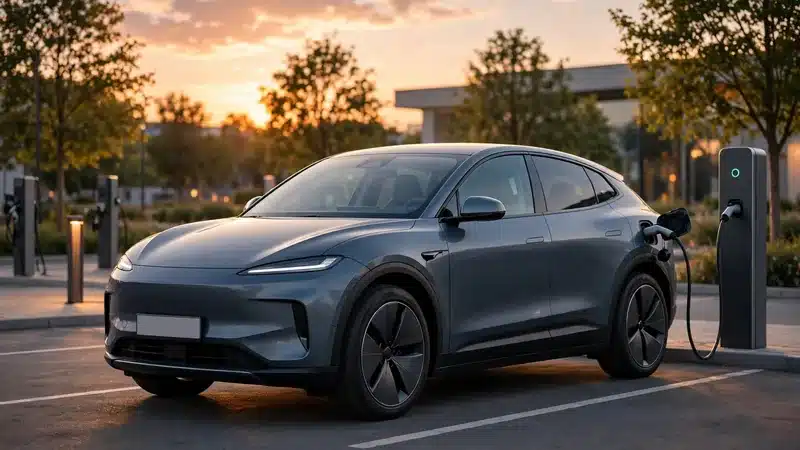
Electric vehicles are no longer a niche. As more drivers switch, insurers have had to think carefully about how EVs differ from gas-powered cars when it comes to risk and repair.
The main difference is the battery. In many EVs, the battery pack is the single most expensive component in the car, and it sits low in the vehicle where collision or road-debris damage can reach it. Repairs that would be routine on a conventional car can involve specialized labor, calibrated sensors, and sometimes battery inspection on an EV. Insurers price this in, which is one reason EV premiums can run higher than comparable gas models.
On the other hand, EVs tend to have strong safety ratings, and repair networks are maturing as more shops learn to work on them, which generally pushes costs down over time. If you are considering an EV, get an insurance quote for the exact model before you buy — the difference between models can be significant, and it is part of the true cost of the car. Our guide to new versus used car insurance costs explains how vehicle choice affects premiums in detail.
Driver-assistance technology in everyday cars
Automatic emergency braking, lane-keeping assist, blind-spot warnings, and adaptive cruise control are now common even in mid-priced cars. These systems prevent a meaningful number of everyday crashes — the fender-benders and rear-end collisions that make up a large share of claims.
That sounds like an obvious win for premiums, and over time it should be. But there is a twist insurers are watching closely: the same sensors and cameras that prevent crashes are expensive to repair or recalibrate after one happens. A minor bumper repair on a car with radar and camera systems can cost far more than the same repair on a simpler car, because the sensors must be replaced and precisely recalibrated to work correctly.
For drivers, the practical takeaway is to treat these features as genuine safety tools, not as reasons to pay less attention. Many car safety features can already lower your premium with some insurers, so it is worth asking whether your car’s equipment earns a discount — and keeping in mind that careful driving still matters more than any gadget.
Digital claims and policy management
The buying and claims experience is becoming more digital. Most insurers now let you get quotes, buy policies, file claims, upload photos of damage, and track repairs entirely from a phone. Some claims that once took weeks of phone tag can now be documented and estimated in days.
This is good news for drivers, with one caution: faster is not always the same as thorough. When you file a claim through an app, document everything yourself — take your own photos, keep your own notes, and save every message. A digital process still ends with a human decision about your money, and good records protect you if there is a disagreement.
Shopping digitally also makes it easier to compare honestly. Because you can pull multiple quotes in one sitting, there is less excuse for buying the first number you see. If you want to time it well, our guide to the best time of year to buy car insurance walks through when rates tend to be most favorable.
What probably will not change
Amid all the change, a lot of car insurance will stay familiar for a long time. Liability coverage will remain the legal foundation of every policy, because the basic problem — one driver causing harm to another — does not depend on technology. States will continue to set their own minimum requirements, and lenders will continue to require comprehensive and collision on financed cars.
Your driving record will keep mattering, too. Tickets and at-fault accidents are strong signals about future risk, and no sensor changes that. The rating factors insurers use — where you live, how much you drive, your claims history, the car you drive — may be joined by new data, but they are unlikely to disappear.
And fully self-driving cars, the kind with no driver attention needed at all, remain a distant prospect for everyday American roads. The cars most of us will drive for years to come still have a human making the decisions — which means human driving behavior will stay at the center of insurance pricing.
| Trend | What it is | What drivers should watch |
|---|---|---|
| Telematics / usage-based programs | Your driving habits measured by app or device | Opt in only after reading the privacy terms; understand whether rates can move both ways |
| Electric vehicles | Battery-powered cars with specialized repairs | Quote the exact model before buying; repair networks are still maturing |
| Driver-assistance systems | Braking, lane-keeping, and blind-spot tech | Great for avoiding crashes; sensors can make repairs pricier after one |
| Digital claims | Filing and tracking claims by phone | Faster, but keep your own photos and records |
| Connected-car data | Cars reporting mileage and diagnostics directly | Convenient for pay-per-mile options; know who sees your data |
How drivers can prepare today
You do not need to predict the future to be ready for it. The drivers who will do best in the years ahead are doing the same things that work right now:
- Keep your record clean. No technology changes the fact that tickets and at-fault claims raise your rate.
- Consider a telematics program if you are a careful driver — it is the most direct way to let your habits lower your price.
- Ask about safety-feature discounts for the car you already drive; you may be leaving money on the table.
- Quote before you switch vehicles, especially to an EV — insurance is part of the car’s real cost.
- Keep learning. An approved defensive driving course still earns discounts with many insurers, and the skills hold up no matter what technology your next car has.
The through line is simple: technology is changing how insurers measure risk, but safe driving is still the thing being measured.
Frequently Asked Questions
Will self-driving cars make car insurance unnecessary?
No — not for any car you are likely to buy soon. Fully self-driving vehicles that need no human attention remain a distant prospect for everyday roads. Even in a far-off future with autonomous cars, there would still be questions of liability and repair costs to insure; the policies would change shape, not disappear.
Will my rates go up if I buy an electric vehicle?
They can, but it depends on the model. EVs often cost more to repair because of battery components and specialized labor, which insurers factor into premiums. Get a quote for the exact EV you are considering before you buy so the insurance cost is part of your decision.
Do telematics programs track everything I do?
They track driving-related data such as braking, acceleration, speed, mileage, and time of day — not your personal life. Still, you are sharing data with your insurer, so read the program’s privacy terms to understand exactly what is collected, how it is used, and how long it is kept before you opt in.
Should I wait to buy insurance until the technology settles?
No. You need coverage now, and the trends described here are arriving gradually, not all at once. Buy the right policy for the car and driving you do today, and revisit your options at each renewal as new programs and discounts become available.
What to Do Next
The future of car insurance is arriving one renewal at a time, and the best move is to stay an active shopper. Review your current policy with fresh eyes: ask your insurer about telematics programs, safety-feature discounts, and whether your car qualifies for anything you are not getting.
Then compare. Understanding what makes up your car insurance premium helps you see which parts new technology might actually change for you — and shopping regularly is still the most reliable way to keep your rate competitive as the market evolves.
This article is for general educational purposes only and is not insurance, legal, or financial advice. Coverage rules and rates vary by state and insurer.