If you deliver food, packages, or groceries with your car, car insurance for delivery drivers is a separate question from the personal auto policy you already have. Most personal policies exclude commercial delivery use, which means an accident during a delivery run can be denied. This guide explains how delivery and gig-driver coverage works, what the platforms do and don’t cover, and how to close the gaps.
Why Delivery Work Changes Your Insurance
A personal auto policy is rated for personal driving — commuting, errands, road trips. The moment you accept an order through a delivery app, your car is performing commercial work, and virtually every personal policy has an exclusion for exactly that. This is the core problem behind car insurance for delivery drivers: the policy you trust for your commute quietly switches off when you are earning.
Insurers price commercial use higher for real reasons. Delivery drivers log far more miles, drive under time pressure, and spend more time in congested traffic and unfamiliar neighborhoods than the typical commuter. If your insurer finds out you were delivering when a crash happened and you never disclosed the activity, the likely outcome is a denied claim — and possibly a non-renewed policy.
The Three Periods of Gig Driving (and What Each Means)
Gig-driver coverage is usually described in three periods. Knowing which one you are in at any moment tells you which policy applies.
Period 1: App on, waiting for an order
You are logged in and available, but have not accepted a delivery yet. Your personal policy’s commercial-use exclusion may already apply here, and platform coverage in this period is typically limited — often liability only, with low limits. This is the most poorly protected period for most gig drivers.
Period 2: Order accepted, en route to pickup
You have accepted an order and are driving to the restaurant or store. Platform coverage generally steps up here, usually with higher liability limits than Period 1. Collision coverage may or may not apply, and deductibles are often high.
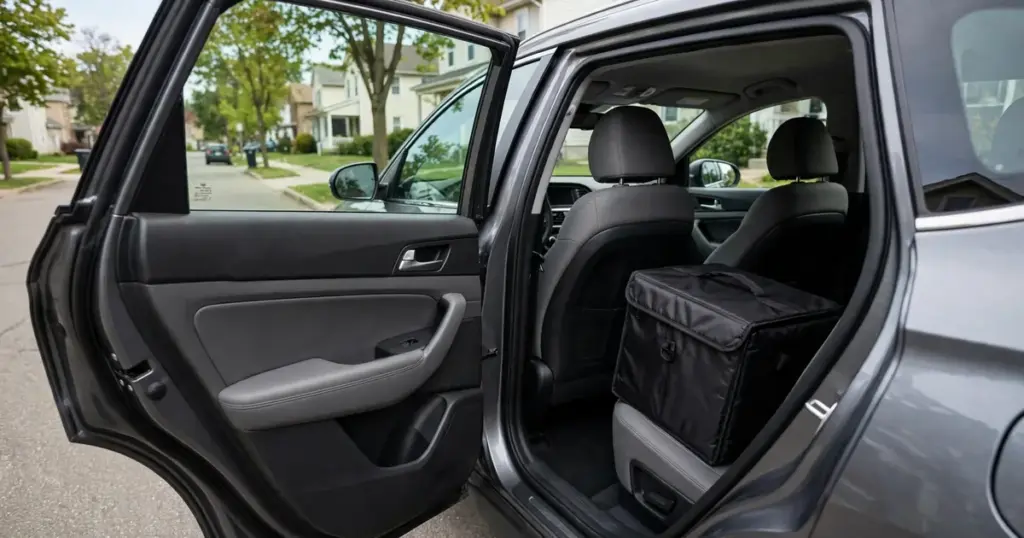
Period 3: Goods in the car, delivering
From pickup to drop-off, platform coverage is typically at its strongest. Liability limits are highest, and the platform usually provides contingent collision coverage — meaning it may pay for damage to your car only after your personal collision claim is denied. Read that twice: it is designed as backup, not as your primary protection.
What Delivery Platforms Actually Cover
Delivery platforms know that personal policies exclude gig driving, so they provide commercial coverage for drivers during active periods. But platform coverage is built to protect the platform’s liability first — your interests are secondary.
- Liability coverage during deliveries: platforms generally carry auto liability insurance that applies while you are on an active order. Limits vary by platform and state.
- Contingent collision: damage to your own car is typically covered only after your personal insurer denies the claim, and the deductible is often much higher than your personal deductible.
- No coverage when offline: the moment you log out, you are on your personal policy — make sure it is active and appropriate.
- Period 1 gaps: while waiting for orders, platform protection is usually minimal. An at-fault accident in this period can leave you personally exposed.
Platform terms change, and they differ between companies. Before relying on any of this, open the insurance section of your driver app or the platform’s driver agreement and read the current terms — do not rely on forum summaries.
Personal Policy vs. Platform Coverage vs. Endorsement
| Situation | Personal policy alone | Platform coverage | Personal policy + delivery endorsement |
|---|---|---|---|
| App off, personal driving | Covered | Not applicable | Covered |
| Waiting for orders (Period 1) | Likely excluded | Minimal (often liability only) | Covered per endorsement terms |
| En route to pickup (Period 2) | Excluded | Liability; collision often contingent | Fills gaps per endorsement terms |
| Active delivery (Period 3) | Excluded | Stronger liability; contingent collision | Fills gaps per endorsement terms |
Rideshare and Delivery Endorsements, Explained
The cleanest fix for most gig drivers is a rideshare or delivery endorsement added to a personal auto policy. Despite the name, many of these endorsements cover delivery driving too — but confirm that with your insurer rather than assuming.
An endorsement typically extends your personal coverage into the periods where it would otherwise be excluded, especially Period 1, and may lower your collision deductible during platform-covered periods. It does not replace the platform’s coverage; it fills the holes around it. Availability varies by state and insurer, and some companies simply do not write policies for gig drivers at all — if yours does not, shop around rather than driving unprotected.
For drivers who do gig work full-time or deliver in a vehicle used mainly for work, a commercial auto policy may be the right answer. It is priced for business use from the start, so there is no exclusion to worry about and no endorsement needed. The premium is higher than a personal policy, but it is the honest fit for a car that is essentially a work tool.
What Coverage Costs and How to Keep It Down
There is no single price for gig-driver coverage — rates vary by state, vehicle, driving record, how many hours you drive, and which insurer you use. A few things consistently keep costs lower:
- Add the endorsement instead of a separate commercial policy if your insurer offers one — it is usually the cheaper of the two options for part-time drivers.
- Keep a clean driving record. Violations hit gig drivers twice: higher personal premiums and, in some cases, platform deactivation.
- Choose a modest, insurable vehicle. Older, common, inexpensive-to-repair cars cost less to insure for delivery work than new or luxury models.
- Compare quotes annually. The gig-driver insurance market changes quickly; the insurer that welcomed you last year may not be the cheapest this year.
- Track your mileage honestly. Rating a delivery driver as a low-mileage pleasure driver is misrepresentation — and a denied claim wipes out years of premium savings in one crash.
Filing a Claim After a Delivery Accident
Accidents during gig work are procedurally messier than ordinary crashes because two insurance systems are involved. Get the basics right at the scene: safety first, call emergency services if anyone is hurt, exchange information, and document everything with photos — the other vehicles, the road, your car, and the goods you were carrying.
Then figure out your period. If you were on an active delivery, notify the platform through the driver app first and follow its claims process. If you were offline, it is a normal personal-policy claim. If you were waiting for an order, you may need to file with both — the platform for its limited Period 1 coverage and your insurer for anything your endorsement covers. Keep copies of your app’s trip history; platforms can confirm which period you were in.
Never shade the facts about what you were doing. Insurers and platforms share claims data, and a lie that is uncovered turns a covered loss into a denied one — or worse, a fraud referral.
Frequently Asked Questions
Does my regular car insurance cover me while delivering food?
Generally no. Personal auto policies almost always exclude commercial use, and delivering goods for pay counts as commercial. You need either a delivery/rideshare endorsement on your personal policy or a commercial policy.
What insurance do I need as a food or grocery delivery driver?
At minimum, the state-required personal auto insurance plus disclosure of your gig driving to your insurer. In practice, most delivery drivers should add a rideshare/delivery endorsement (if available in their state) to cover the gaps the platform’s insurance leaves — especially while waiting for orders.
Am I covered by the delivery app’s insurance?
Partially. Platforms provide liability coverage during active deliveries and contingent collision coverage for your car, but protection is thin while you wait for orders, deductibles are often high, and collision coverage usually pays only after your personal insurer denies the claim.
Will my insurance company cancel me for doing gig work?
They can non-renew or cancel if you hid the activity — the risk is the hiding, not the work itself. If you disclose delivery driving, most insurers will either add an endorsement, move you to an appropriate policy, or tell you they don’t cover it so you can shop elsewhere.
Is a commercial policy better than an endorsement for delivery drivers?
For part-time gig drivers, an endorsement is usually simpler and cheaper. For full-time drivers or vehicles used mostly for deliveries, a commercial auto policy provides cleaner, purpose-built protection without coverage-period games.
What to Do Next
If you drive for delivery apps, call your insurer this week: disclose the gig work, ask for a delivery or rideshare endorsement by name, and get the answer in writing. Then read your platform’s current driver insurance terms so you know exactly what applies in each coverage period. For related reading, see our overview of special car insurance situations, our guide to car insurance for Turo hosts and car-sharing owners (similar commercial-use issues from the other side), and car insurance for rental cars. If you also carry passengers for hire, read what rideshare insurance is.
This article is for general educational purposes only and is not insurance, legal, or financial advice. Coverage rules and rates vary by state and insurer.