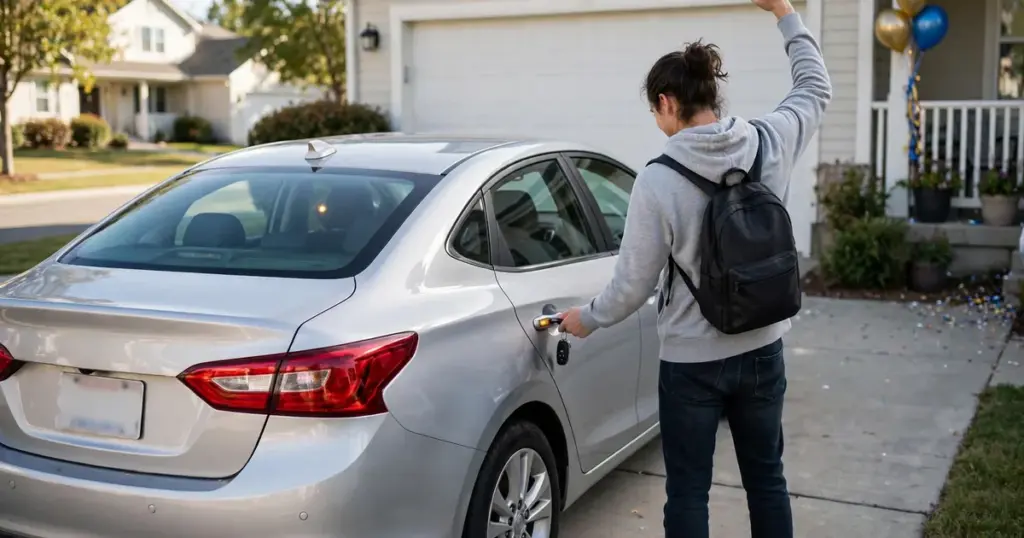
Turning 25 is one of the most talked-about milestones in car insurance. The short answer to “do car insurance rates drop at age 25?” is usually yes — most drivers see their rates go down around their 25th birthday, but the drop is not automatic, and it is rarely as dramatic as people expect. Here is what really happens at 25 and how to make sure you get the savings.
Why Insurers Care About Age 25
Insurers set prices based on risk, and decades of claims data show that younger drivers — especially teenagers and drivers in their early twenties — file more claims than older drivers. Age 25 has long been treated as a turning point where that risk statistically levels off.
This is not about any individual driver’s skill. It is about group averages: across millions of policyholders, drivers 25 and older show a meaningfully different claims pattern than drivers under 25. That is why 25 became the industry’s informal line between “young driver” pricing and standard adult pricing. To see how this fits into the bigger picture, read our guide to how age affects car insurance across every stage of life.
How Much Do Rates Actually Drop?
There is no fixed percentage, and anyone quoting you one should be treated with skepticism. The size of the drop depends on several things:
- Where you started. A driver who paid very high young-driver rates will usually see a bigger absolute drop than one who was already on a parent’s policy with good discounts.
- Your driving record. A clean record at 25 can combine with the age change for a noticeable reduction. A recent ticket or at-fault accident can wipe out most of the age benefit.
- Your state. Some states limit how much weight insurers can put on age, so the birthday effect is smaller there.
- Your coverage. The drop applies to the whole premium, but it is most visible on liability coverage, which is the part most sensitive to driver risk.
Keep expectations realistic: for many drivers it is a meaningful but modest reduction, not a halving of the premium. The drivers who see the biggest improvements are the ones who were paying the steepest young-driver surcharges in the first place — for example, someone moving off car insurance for 18-year-old drivers pricing and several years down the road.
When the Drop Happens
Do not expect your bill to change on your birthday. In practice:
- It applies at renewal. Insurers re-rate your policy at each renewal period. The age-25 pricing usually shows up on the first renewal after your 25th birthday.
- It may be gradual. Many insurers phase young-driver surcharges out over several renewals rather than removing them all at once at 25.
- Ask, don’t assume. If your renewal after turning 25 looks unchanged, call and ask whether the young-driver surcharge was removed. Billing systems do not always update automatically.
Why Your Rate Might Not Drop
Plenty of 25-year-olds open their renewal and see no improvement. Common reasons include:
Your record offsets the age change
A speeding ticket, at-fault crash, or claim in the last few years can keep your rate higher even as the age factor improves. Age is only one input — learn how your driving record affects your rates to see the full picture.
You were never paying the surcharge
If you were listed on a parent’s policy with multi-car and loyalty discounts, or in a state that restricts age-based pricing, there may have been little young-driver surcharge to remove.
Other factors moved against you
You may have moved to a pricier ZIP code, added a more expensive car, or lost a good-student discount around the same time — all of which can cancel out the age benefit. Reviewing the full list of factors behind car insurance rates helps you spot what else changed.

How to Maximize the Savings at 25
Your 25th birthday is a natural checkpoint to take control of your insurance. Here is how to get the most out of it:
- Shop for quotes before your renewal. This is the single most effective step. Other insurers will price you as a 25-year-old from scratch, which often beats your current insurer’s phased adjustment.
- Clean up your record. If old tickets are about to age off your record, time your shopping for after they drop.
- Recheck your discounts. Good-student discounts may have expired — but you may now qualify for others, like professional association, alumni, or bundling discounts.
- Consider telematics. Usage-based programs that track actual driving behavior can reward safe 25-year-old drivers with discounts beyond the age change.
- Right-size your coverage. If you are driving an older car, reexamine whether full coverage still makes financial sense — but never drop below your state’s required minimums.
Insurance Rate Milestones by Age
Age 25 is the most famous milestone, but it is not the only one. Here is how pricing typically shifts across a driver’s life:
| Age range | Typical pricing pattern | What to do |
|---|---|---|
| 16–19 | Highest rates; steep young-driver surcharges | Stay on a parent’s policy, keep grades up, drive safely |
| 20–24 | Still higher than average, easing gradually with experience | Build a clean record; compare quotes at each renewal |
| 25 | Young-driver surcharges typically phase out | Shop aggressively; confirm the surcharge was removed |
| 30s–50s | Generally the lowest-risk, lowest-rate years | Maintain continuous coverage and a clean record |
| 65+ | Rates may rise again as claim patterns shift | Ask about mature-driver and low-mileage discounts |
Frequently Asked Questions
Do car insurance rates automatically drop at age 25?
Not automatically. Most insurers apply young-driver pricing at renewal, so the change usually appears on your first renewal after turning 25. If nothing changed, call your insurer and ask whether the surcharge was removed — and compare quotes elsewhere.
Is 25 the age when car insurance gets cheap?
It gets cheaper for most drivers, but “cheap” is relative. Drivers in their 30s, 40s, and 50s with clean records and continuous coverage typically pay the lowest rates. Age 25 is the end of the young-driver penalty, not the bottom of the pricing curve.
Do I need to tell my insurer I turned 25?
Your insurer already has your date of birth, so in theory the adjustment happens on its own. In practice, it is worth a call at your next renewal to confirm the young-driver surcharge came off — systems and timing do not always line up.
Will my rate drop at 25 if I have a ticket?
A recent ticket or at-fault accident can largely cancel out the age benefit. The age factor improves, but the violation surcharge stays until it ages off your record — usually after three to five years, depending on the state and insurer.
Should I switch insurers when I turn 25?
It is one of the best times to shop. Your current insurer phases the change in gradually, while a new insurer quotes you as a 25-year-old immediately. Compare at least a few quotes with identical coverage before deciding.
What to Do Next
Mark your calendar for the renewal after your 25th birthday: request a policy review from your current insurer, then gather competing quotes with the same coverage limits. Pair this with a broader look at how age shapes car insurance pricing and the main factors behind your rate so you keep saving well past 25.
This article is for general educational purposes only and is not insurance, legal, or financial advice. Coverage rules and rates vary by state and insurer.