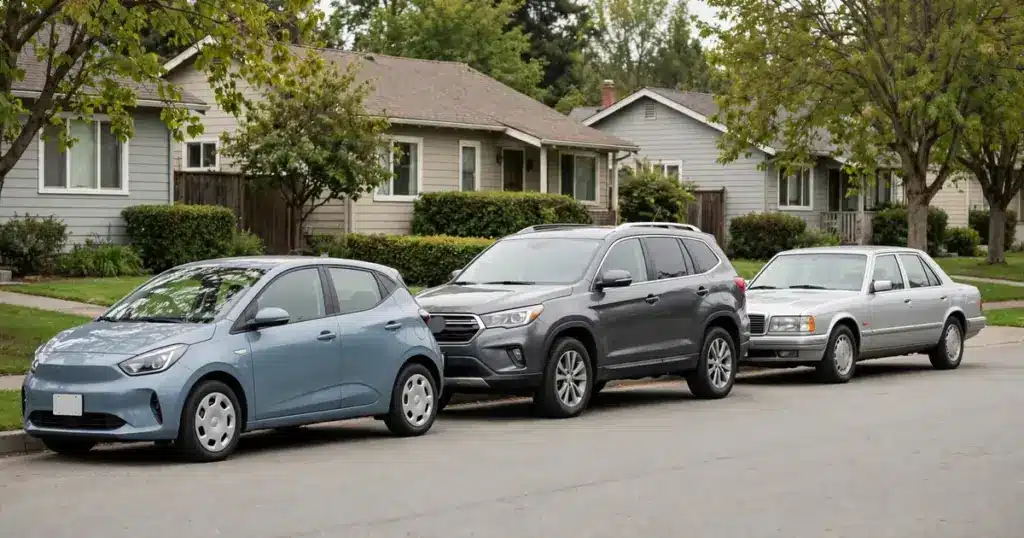
Yes — the car you drive is one of the strongest levers on your premium. Understanding how car affects insurance premium pricing can save you real money, because two drivers with identical records can pay very different rates simply because one drives a sports coupe and the other a family sedan. Insurers do not price the driver alone; they price the driver and the vehicle together.
Why Insurers Care About Your Car
Every make, model, and model year carries its own loss history. Insurers track how often each vehicle is involved in claims and how expensive those claims are, then assign the vehicle a rating symbol. A car with a long record of costly collision repairs or frequent theft claims gets a higher symbol — and a higher premium. Your vehicle is one entry on the full list of factors that affect car insurance rates, and it interacts with all the others: where you park it, how you drive it, and how many miles you put on it.
This is also why quotes can swing so much between cars you are considering. The difference between insuring a sensible commuter sedan and a high-horsepower coupe is rarely small, and it compounds every six months at renewal. Smart shoppers price the insurance before they fall in love with the car.
The 6 Vehicle Factors That Move Your Premium
1. The car’s value
Collision and comprehensive coverage pay to repair or replace your car, so a more expensive vehicle costs more to insure for those coverages. A car with a high sticker price means a bigger potential payout after a total loss, and the premium reflects that. Liability coverage, which pays for damage you cause to others, is less sensitive to your car’s value.
2. Repair costs and parts prices
Two cars with the same sticker price can cost very different amounts to fix. Vehicles with aluminum body panels, complex sensors embedded in bumpers, or hard-to-source imported parts run up bigger repair bills — and insurers pass that through as higher collision premiums. Mainstream models with cheap, widely available parts are the most economical to repair and to insure.
3. Safety ratings and crash performance
Cars that protect occupants well tend to generate smaller injury claims, which helps liability and personal injury premiums. Strong crash-test performance and standard safety equipment — multiple airbags, stability control, automatic emergency braking — generally work in your favor. Some insurers also offer discounts for specific advanced driver-assistance features, so it is worth asking.
4. Theft rates
Comprehensive coverage pays if your car is stolen, so models that thieves target carry higher comprehensive premiums. Insurers watch theft data by model closely, and a spike in thefts of a particular vehicle can raise rates for every owner of that model. Factory anti-theft systems and tracking devices can earn you a discount with many insurers.
5. Engine power and performance
High-horsepower cars are statistically involved in more severe crashes, and insurers price that in. Sports coupes, muscle cars, and performance trims of ordinary models all tend to carry higher premiums than their tamer siblings. Even within the same model line, the turbocharged or V8 version usually costs more to insure than the base four-cylinder.
6. Vehicle age
Newer cars cost more to replace, which pushes collision and comprehensive premiums up. Older cars, on the other hand, are worth less — so the maximum payout shrinks and those coverages get cheaper. Age cuts both ways, though: a very old car without modern safety features may not earn the safety-related discounts a newer one does.
Which Types of Cars Cost the Most (and Least) to Insure
The table below summarizes the general pattern. Remember these are tendencies, not guarantees — the exact premium always depends on the specific model, your record, and how your ZIP code affects your car insurance cost.
| Vehicle type | Why insurers charge more or less | General tendency |
|---|---|---|
| Sports and performance cars | High horsepower, expensive parts, severe-crash history | Among the most expensive to insure |
| Luxury vehicles | High replacement value, costly specialized repairs | Well above average |
| Large SUVs and trucks | Heavier vehicles can cause more damage; some are theft targets | Above average, varies widely by model |
| Electric vehicles | Expensive battery packs and specialized repair networks | Often above average for comparable gas models |
| Family sedans | Strong safety records, cheap parts, moderate power | Below average |
| Minivans | Driven cautiously on average, excellent safety, low theft | Among the cheapest to insure |
If you have your eye on a performance car, do not assume the worst without checking — our roundup of the cheapest sports cars to insure shows that some fun-to-drive models are surprisingly reasonable. The spread within a category is often bigger than the spread between categories.
Does an Older Car Still Need Full Coverage?
“Full coverage” — typically liability plus collision and comprehensive — makes the most sense when the car is worth enough that you could not comfortably replace it yourself. As a car ages and its value drops, the math changes: you are paying a premium to protect a shrinking payout.
A practical way to decide: compare your annual collision and comprehensive premium (plus the deductible) against the car’s current market value. If a year or two of premiums would nearly buy the car’s value, dropping those coverages deserves serious thought. Keep liability coverage either way — it protects your finances against claims from others, and every state requires at least some of it.
A few cautions before you drop coverage. If you still have a loan or lease, your lender almost certainly requires collision and comprehensive until it is paid off. And consider your own situation: if you could not afford to replace the car out of pocket tomorrow, keeping the coverage is the safer choice even on an older vehicle.
How to Pick a Car With Insurance in Mind
If you are shopping for a car, a little insurance homework upfront can save you hundreds per year for as long as you own it:
- Get quotes on your finalists. Give insurers the exact year, make, model, and trim of each car you are considering. Rank your shortlist by total cost of ownership — payment plus insurance plus fuel — not just the sticker price.
- Favor strong safety ratings. Top crash-test performers with standard automatic emergency braking and blind-spot monitoring tend to earn better rates and may qualify for feature discounts.
- Think twice about performance trims. The sport package, bigger engine, or turbo upgrade often carries a noticeable insurance surcharge over the base model. Decide whether the extra fun is worth the extra premium.
- Check theft data. Some practical, popular models are among the most-stolen vehicles in the country. A quick search of theft trends for your candidate models can flag an expensive surprise.
- Consider repair costs. Mainstream brands with dealers and parts everywhere are cheaper to fix than niche imports or vehicles with exotic materials. Ask a body shop which cars they dread working on.
- Mind the modifications. Aftermarket wheels, lift kits, engine tunes, and custom stereos can raise your premium — and they may not be covered at all unless you disclose them and add custom-parts coverage.
And remember that the vehicle is only part of the equation: your driving record affects insurance rates too, and a clean record keeps any car’s premium as low as it can be.
Frequently Asked Questions
Does a red car cost more to insure?
No. Vehicle color has no effect on car insurance premiums — this is one of the industry’s most persistent myths. Insurers care about the year, make, model, body style, engine, and safety equipment. They do not ask about color, and it does not appear anywhere in the rating formula.
Is it cheaper to insure a new car or an old car?
Usually an older car is cheaper, mainly because collision and comprehensive payouts are capped at the car’s lower value. But the gap is not always huge: liability rates are similar regardless of age, and a brand-new car with top safety ratings and anti-theft tech can sometimes beat an older car with none of those features. Quote both before you decide.
Do safety features lower my car insurance premium?
They can. Features like automatic emergency braking, anti-lock brakes, airbags, and factory anti-theft systems may qualify for discounts, and cars with strong crash-test records generally rate better overall. Discounts vary by insurer, so ask specifically which features earn a break when you get a quote.
Do I need to tell my insurer about modifications?
Yes. Aftermarket modifications — lift kits, engine tunes, custom wheels, upgraded stereos — change the vehicle’s value and risk profile. If you do not disclose them, the insurer may not cover the added parts after a claim, and in some cases nondisclosure can complicate the claim itself. Report mods and ask about custom-parts coverage.
What to Do Next
Before your next car purchase, get insurance quotes on every finalist and compare total cost of ownership — the cheapest car to buy is not always the cheapest to own. If you already own your car, revisit your coverage as it ages: raising your deductible or dropping collision on a low-value vehicle are proven ways to save money on car insurance without giving up the protection that matters.
This article is for general educational purposes only and is not insurance, legal, or financial advice. Coverage rules and rates vary by state and insurer.