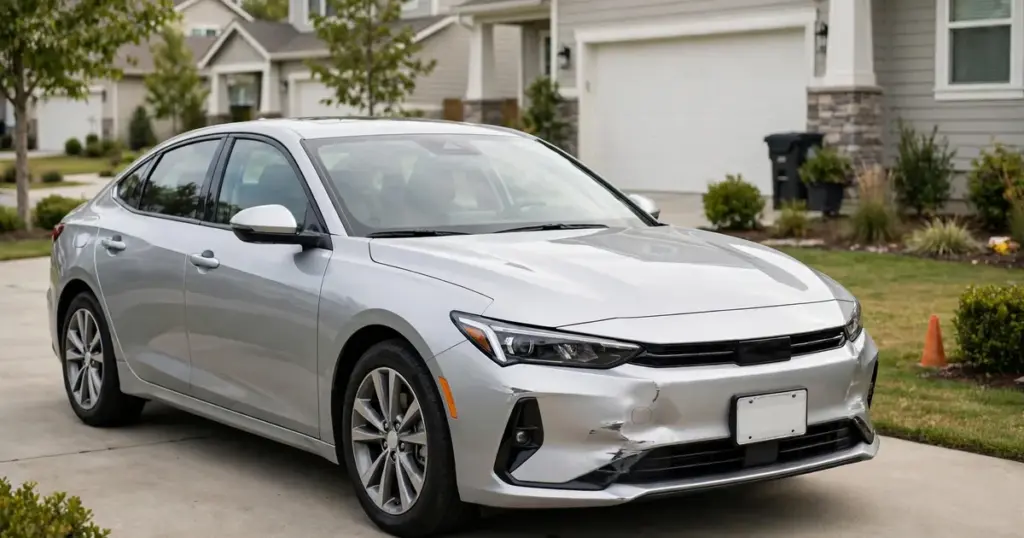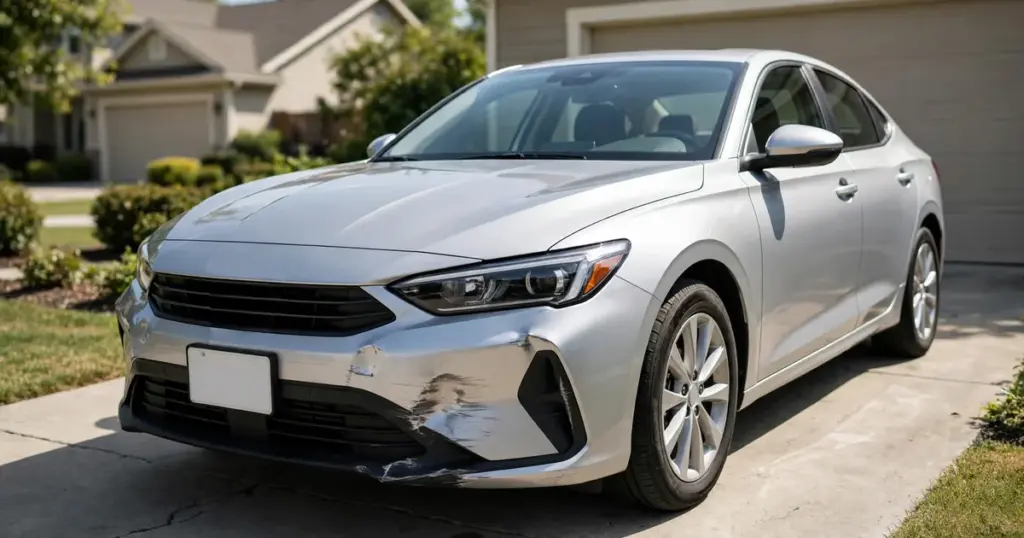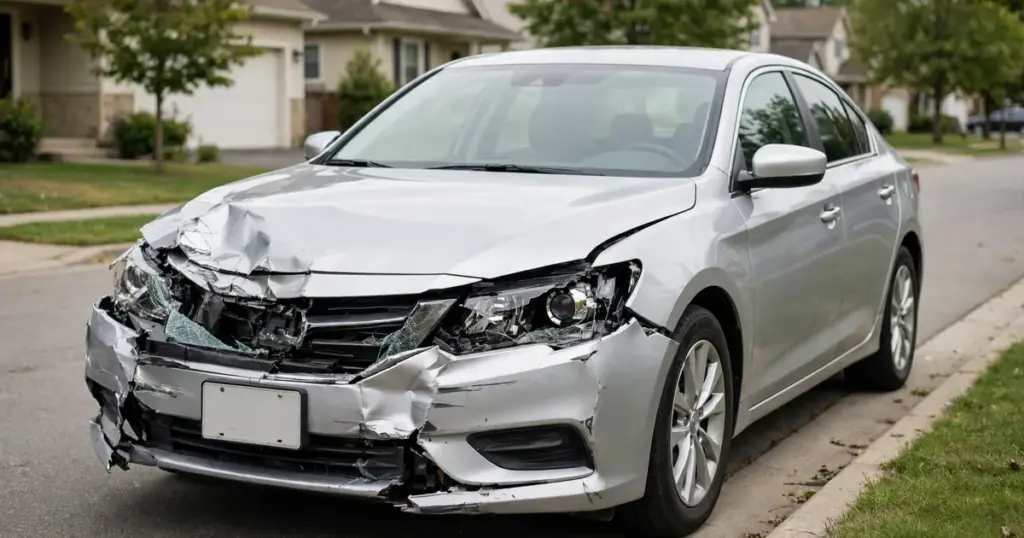
When your car is badly damaged, the insurer doesn’t just guess whether to fix it. It runs a math problem: the cost of repairs plus related expenses versus the car’s actual cash value. If the damage crosses a set threshold, the car is declared a total loss — and your totaled car insurance payout is based on the car’s value, not the cost of the damage.
That distinction surprises a lot of drivers. A totaled car isn’t necessarily crushed beyond recognition; it may look repairable. The decision comes down to whether repairing it makes financial sense, and the answer is shaped by your state’s rules, the adjuster’s valuation, and the fine print in your policy.
What “Totaled” Actually Means
In insurance language, a “total loss” means the insurer has decided that paying you the car’s value costs less than paying to repair it. It is a financial decision, not a mechanical one. A car can be declared a total loss even though it still starts, drives, and looks fixable — because hidden structural damage, airbag replacement, or specialized labor can push the repair bill far higher than the first estimate suggests.
Actual cash value (ACV) is the key number. It means what your car was worth on the market the moment before the accident — accounting for its age, mileage, condition, trim level, and local prices. It is not the price you paid, not the payoff on your loan, and not what a brand-new replacement would cost. Depreciation is already baked in, which is why a totaled older car often yields a smaller check than the owner hoped for.
The Total Loss Threshold
Insurers compare the estimated repair cost against a “total loss threshold” — a percentage of the car’s actual cash value. If repairs meet or cross that percentage, the car is totaled.
Here is where state law matters. Some states set a specific threshold by statute, so every insurer operating there must follow it. Other states set no fixed number and leave the call to each insurer’s own guidelines. A few states even use a formula that factors in the car’s salvage value. Because the rule changes at the state line, ask your adjuster which standard applies to your claim — and confirm it with your state’s insurance department if anything looks off.
Note that the “repair cost” side of the equation is not just the body shop’s quote. Adjusters typically add related costs such as towing, storage, and a rental car allowance for the repair period. Those extras can tip a borderline car over the threshold.
How the Adjuster Estimates Your Car’s Value
Once your claim is open, the insurer assigns an adjuster to value your car. The process usually works like this:
- Comparable vehicles. The adjuster pulls recent sale prices for similar cars — same make, model, year, trim, and mileage — sold in your area. These “comps” anchor the valuation.
- Condition adjustments. Dents, worn tires, stained upholstery, or a spotty service history can lower the number; recent major repairs or new tires can raise it. This is why the adjuster asks for maintenance records.
- Mileage and options. Below-average mileage helps. Factory options and packages count; aftermarket add-ons usually add little or nothing.
- A valuation report. Most insurers use a third-party valuation service and will share the report if you ask. Get it — you cannot judge whether the number is fair without seeing the comps.
If you recently invested in the car — a new transmission, new tires, a fresh paint job — tell the adjuster and provide receipts. Insurers do not automatically know about that spending, and documented improvements can move the valuation upward.

Your Deductible, Your Loan, and the Payout
The total loss check is not the full actual cash value. Your collision (or comprehensive, if that coverage applies) deductible is subtracted first. A $12,000 valuation with a $1,000 deductible means an $11,000 check.
If you have a loan or lease, the check goes to the lender first, not to you. And here is the painful scenario: cars depreciate faster than many loans pay down, so the payout can be smaller than the loan balance. If you owe $14,000 and the payout is $11,000, you still owe the lender the $3,000 difference. Gap coverage exists specifically for this situation — it pays the gap between the car’s value and the loan balance — but it must be on your policy before the crash. You cannot add it after the fact.
Once the insurer pays, the totaled car becomes the insurer’s property (unless you keep it, as described below), and you sign the title over. That is also why some drivers are asked to sign a power of attorney for a totaled car — it lets the insurer handle the title transfer.
Repair vs. Total Loss: What Changes for You
The two outcomes lead down very different paths. Here is how they compare:
| Aspect | Car Is Repaired | Car Is Totaled |
|---|---|---|
| What you receive | Repairs paid (minus deductible); you keep the car | Cash payout for actual cash value (minus deductible) |
| Title | Unchanged | Transferred to the insurer; car gets a salvage title |
| Loan balance | Unaffected | Paid down by the check; you owe any shortfall |
| Insurance going forward | Coverage continues as before | Policy must be updated; insuring a salvage-title car is harder |
| Timeline | Depends on shop backlog and parts | Often faster once valuation is agreed — see how long a car insurance claim takes |
Can You Keep a Totaled Car?
In many states, yes — this is called “owner-retained salvage.” The insurer deducts the car’s salvage value (what it would fetch at auction) from your payout, and you keep the wreck. People do this when the car has sentimental value, when they can repair it cheaply themselves, or when the damage is mostly cosmetic.
Before you go this route, understand the trade-offs:
- Salvage title. The state will brand the title as salvage. To drive it again you must repair it, pass an inspection, and apply for a rebuilt title — and the rules for that vary by state.
- Insurance gets harder. Many insurers will only sell liability coverage on a rebuilt-title car, not collision or comprehensive, because valuing it is difficult.
- Resale value drops. A salvage or rebuilt title follows the car permanently and scares off most buyers.
If the damage is minor, it may be worth asking whether the car truly needs to be totaled — or, for a cheaper repair, consider paying out of pocket instead of filing a claim at all.
What to Do If You Disagree With the Valuation
The adjuster’s number is an opening position, not a verdict. If it looks low:
- Ask for the valuation report and check the comparable vehicles. Are they truly similar — same trim, similar mileage, sold near you? Wrong comps are the most common source of low valuations.
- Submit your own comps. Gather current listings for genuinely similar cars in your area and send them to the adjuster in writing.
- Document the car’s condition. Maintenance records, receipts for recent work, and photos taken before the crash all support a higher number.
- Request a supervisor review or an independent appraisal. Some policies include an appraisal clause that lets each side hire an appraiser, with an umpire breaking the tie.
If negotiation stalls, you have formal options — our guide to how to dispute a car insurance claim decision walks through each one, including when to contact your state’s insurance department.
Frequently Asked Questions
What does it mean when an insurer totals your car?
It means the insurer decided the car is a total loss: the estimated repair cost reached the total loss threshold, a set percentage of the car’s actual cash value. You receive a payout for the car’s pre-crash market value minus your deductible, and the insurer takes the title.
Can I negotiate a total loss settlement?
Yes. Request the valuation report, check that the comparable vehicles are truly similar, and submit your own comps plus maintenance records if the number looks low. If the adjuster won’t budge, ask for a supervisor review or check whether your policy has an appraisal clause.
What happens if I still owe money on a totaled car?
The payout goes to your lender first. If the check is smaller than your loan balance, you still owe the difference — unless you carry gap coverage, which pays the shortfall. Without it, the remaining balance is your responsibility.
Will a total loss claim raise my insurance rates?
It can, depending on who was at fault and your insurer’s rating practices. At-fault claims are more likely to affect your premium at renewal than not-at-fault ones. Your driving record, state, and claim history all play a role, so the effect varies from driver to driver.
What to Do Next
If your car was just declared a total loss, start by reviewing the car insurance claims process so you know what paperwork and deadlines apply, then request the valuation report in writing. Compare the insurer’s comps against real listings in your area before you accept the number. And if you’re weighing whether a smaller repair is even worth a claim, read our guide on when to file a small claim or pay out of pocket first.
This article is for general educational purposes only and is not insurance, legal, or financial advice. Coverage rules and rates vary by state and insurer.