Your car insurance rate is driven up by the same things that make you a bigger risk to an insurer: accidents and tickets on your record, a credit-based insurance score that has slipped, an expensive-to-repair car, a high-traffic or high-theft ZIP code, and lots of miles on the road. The good news is that understanding what affects car insurance rates gives you a clear list of levers you can pull. This guide walks through every major factor that pushes your rate up — and the practical steps that can bring it back down.
The Short Answer: What Pushes a Rate Up
Insurers set your rate by predicting how likely you are to file a claim and how expensive that claim will be. Anything that raises either number — more risk, more cost — pushes your rate up. The main culprits are a record with violations or at-fault crashes, a low credit-based insurance score, a young age or short driving history, a car that costs more to repair or replace, a ZIP code with heavy traffic or frequent theft claims, and high annual mileage.
Some of these you can change quickly (your coverage choices, your credit habits), some change on their own over time (your age, an old ticket fading off your record), and some you can only plan around (where you live). The sections below go through each one and pair it with something you can actually do about it.
You Behind the Wheel: Personal Factors
Personal factors are the part of your rate most tied to you as a driver. They carry the most weight in most pricing models, which also means they are where the biggest savings hide.
Your driving record
Nothing drives a rate up faster than a fresh violation or an at-fault accident. Speeding tickets, reckless driving, DUIs, and at-fault crashes each signal that you are more likely to cost the insurer money — and your premium reflects that for years afterward. Insurers typically look back three to five years at your motor vehicle record, so a single bad year can follow you through several renewals.
The fix is straightforward but slow: drive clean. Every year without a new incident moves the old one further into the past, and many insurers offer accident-free or safe-driver discounts once you have built a clean stretch. If you are not sure what is on your record, ordering your driving record from your state’s motor vehicle agency is worth doing — errors do happen, and getting one corrected can help your rate. For a deeper look at how incidents on your record translate into higher premiums, see our guide on how your driving record affects insurance rates.

Your credit-based insurance score
In most states, insurers use a credit-based insurance score — a number derived from your credit history — as one of the factors in your rate. Drivers with lower scores tend to pay more, even with identical driving records. This surprises a lot of people, because it has nothing to do with how you drive. The rationale insurers use is that their data shows a link between credit behavior and claim likelihood.
A few states restrict or ban the use of credit information in auto insurance pricing, so this factor does not apply everywhere. But in states where it is allowed, improving your score is one of the highest-impact things you can do to lower your rate — and it costs you nothing to work on. Paying bills on time, keeping credit card balances low relative to your limits, and avoiding unnecessary new accounts are the habits that move the needle. Our companion guide walks through exactly how to improve your credit-based insurance score.
Your age and driving experience
Young and newly licensed drivers pay some of the highest rates in the market because crash statistics show they file more claims. Rates generally fall as you gain years of clean driving history behind you. How age affects car insurance runs through the full picture, and if you are in your mid-twenties, car insurance rates at age 25 explains the milestone many drivers wait for.
You cannot speed up your birthday, but young drivers can offset the age penalty by staying on a clean record, completing a defensive driving course where accepted, choosing a modest car, and asking about every discount they might qualify for. Parents adding a teen driver can also compare how different insurers rate young drivers — the differences are often large.
Your marital status
Married drivers typically pay less than single drivers with otherwise similar profiles, because insurer data associates marriage with fewer claims. It is a smaller factor than your record or your car, but it is one worth knowing about — if your status changes, tell your insurer, since it can trigger a re-rating. See marital status and car insurance rates for the details.
The Car Itself
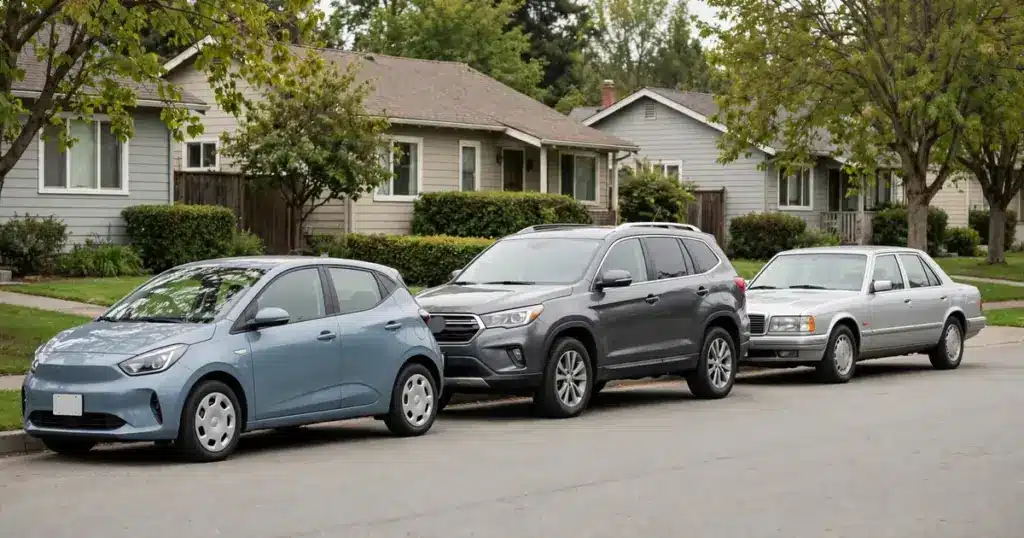
The car you insure matters almost as much as the driver behind the wheel. Insurers look at three things: how much the car costs to repair or replace, how likely it is to be stolen, and how well it protects the people inside it.
Expensive cars cost more to insure, and so do cars with pricey parts and complex electronics — even a minor fender bender can mean a large repair bill on a high-end model. Cars that show up frequently in theft reports also carry higher comprehensive premiums. On the other side, strong crash-test performance and modern safety features (like automatic emergency braking) can work in your favor, because they reduce the chance and severity of injury claims.
If you are shopping for a car, getting an insurance quote before you buy is one of the smartest moves you can make. Two cars at the same price can carry noticeably different premiums. Our guide on how the car you drive affects your premium breaks down exactly what to compare.
Where You Live and How Far You Drive
Your rate is priced for the roads you actually drive on — which means your address and your odometer both matter.
Your ZIP code
Dense urban areas with heavy traffic, higher crash frequency, more thefts, and expensive local repair shops tend to produce higher rates than quieter rural areas. Even moving a few miles can change your rate, because insurers price by ZIP code. You cannot (and should not) choose where you live based on insurance, but it is worth knowing that your location is baked into your premium — and that a move is a good moment to compare quotes. Learn more in our guide to how your ZIP code affects car insurance.

Your annual mileage
More miles on the road means more exposure to accidents, so high-mileage drivers generally pay more than low-mileage drivers. If you work from home, take transit, or simply do not drive much, you may be paying a high-mileage rate for a low-mileage reality. Tell your insurer your real annual mileage and ask whether a lower-mileage tier or a usage-based program fits your driving — it is one of the easiest legitimate ways to cut your bill. Our guide to annual mileage and car insurance explains how insurers check and what counts.
Policy Choices That Raise or Lower Your Bill
Even with the same driver, car, and address, your own coverage decisions swing your premium up or down.
- Coverage limits and deductibles. Higher liability limits and lower deductibles cost more; lower limits and higher deductibles cost less. Raising your deductible is one of the fastest ways to cut your premium — just make sure you can actually pay the higher amount out of pocket if you file a claim.
- Optional coverages and add-ons. Rental reimbursement, roadside assistance, and other extras each add a line to your bill. Keep the ones you would genuinely use and drop the ones you would not.
- Continuous coverage. A lapse in coverage — even a short one — can push your rate up when you re-insure, because insurers treat gaps as added risk. Keeping your policy active, even at minimum coverage while a car sits unused, usually costs less than the surcharge a lapse triggers.
- How you pay. Paying in full rather than monthly often earns a discount, and going paperless or setting up autopay can shave a bit more off.
If you want the mechanics behind all of this, how car insurance is calculated walks through how insurers combine these factors into a price.
How to Lower Your Rate: A Practical Checklist
Here is the full picture in one place — each factor that drives your rate up, paired with the action that brings it down:
| Factor | What drives your rate up | How to lower it |
|---|---|---|
| Driving record | Tickets, at-fault accidents, DUIs in the last 3–5 years | Drive clean; old violations age off your record over time |
| Credit-based insurance score | Late payments, high balances, thin credit history | Pay on time, keep balances low, avoid unnecessary new accounts |
| Age and experience | Young age, newly licensed, short driving history | Stay violation-free; ask about defensive driving and good-student discounts |
| Your car | Expensive to repair, high theft rates, costly parts | Quote insurance before buying; favor strong safety ratings |
| Location | High-traffic or high-theft ZIP code | Re-shop quotes after a move; garage parking can help |
| Mileage | Long commutes, high annual miles | Report accurate low mileage; consider usage-based programs |
| Policy choices | High limits, low deductibles, extra add-ons, coverage lapses | Raise deductibles thoughtfully; drop unused add-ons; never let coverage lapse |
Beyond the checklist, two habits multiply everything else. First, compare quotes at every renewal — loyalty rarely earns the best price, and a car insurance rate increase letter is your signal to shop rather than accept the new price. Second, ask your current insurer about every discount you might qualify for: safe driver, bundling home and auto, paperless billing, paying in full, and low mileage are the most common. Our guide to car insurance discounts lists what to ask about so you do not leave money on the table.
Frequently Asked Questions
Why did my car insurance rate go up even though I had no accidents?
Your rate can rise without any change in your driving. Insurers adjust prices across the board when claim costs climb in your area, and your own credit-based insurance score may have slipped without you noticing. A move to a new ZIP code, an aging vehicle with pricier parts, or an expiring discount can also lift your bill at renewal.
Which factor affects my car insurance rate the most?
For most drivers, the driving record carries the heaviest weight: recent tickets and at-fault accidents raise rates more than any other single factor. Your credit-based insurance score and your age come next for many insurers, followed by your car, your ZIP code, and your annual mileage. Your coverage choices then set the final number.
Can I lower my rate in the middle of a policy term?
Often, yes. You can raise your deductible, drop add-ons you do not use, report a lower annual mileage, or add discounts you newly qualify for at any point — your insurer will adjust your premium from that date forward. Some changes, like re-rating after a ticket ages off, take effect at renewal instead.
Will checking my own credit hurt my credit-based insurance score?
No. Reviewing your own credit reports and scores is a soft inquiry and does not damage your credit. Insurers also use insurance-specific inquiries that do not affect your score the way applying for a new credit card can. Checking your reports regularly is actually one of the best ways to catch the errors that drag your score down.
What to Do Next
Start with the quick wins: confirm your annual mileage is accurate, check that every discount you qualify for is actually applied, and read any renewal or rate-increase notice instead of auto-accepting it. Then work the longer-term levers — a clean driving record and a stronger credit-based insurance score — that keep your rate down year after year. If you are buying a car, quote the insurance before you sign. And at every renewal, get competing quotes: it is the single most reliable way to make sure the price you are paying is still the price you deserve.
This article is for general educational purposes only and is not insurance, legal, or financial advice. Coverage rules and rates vary by state and insurer.