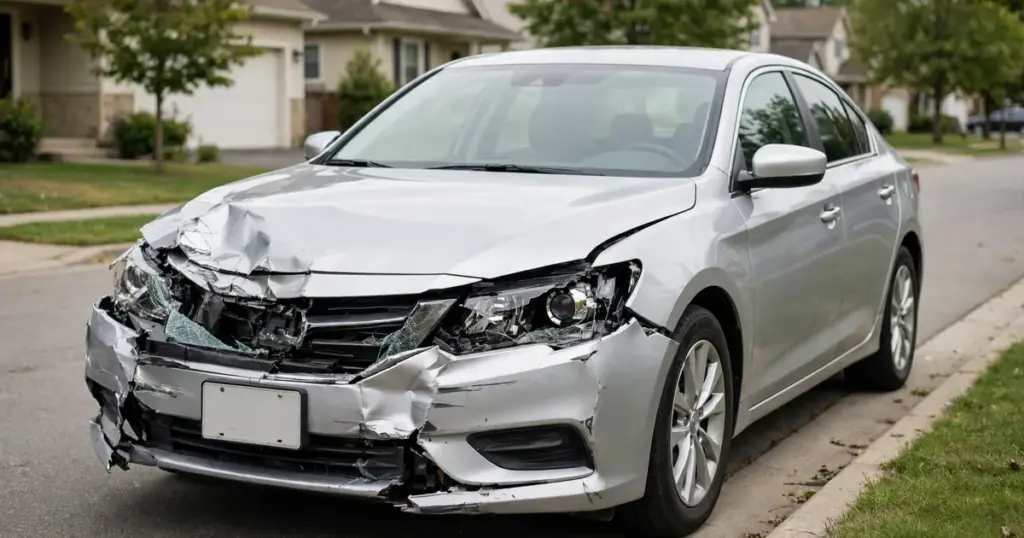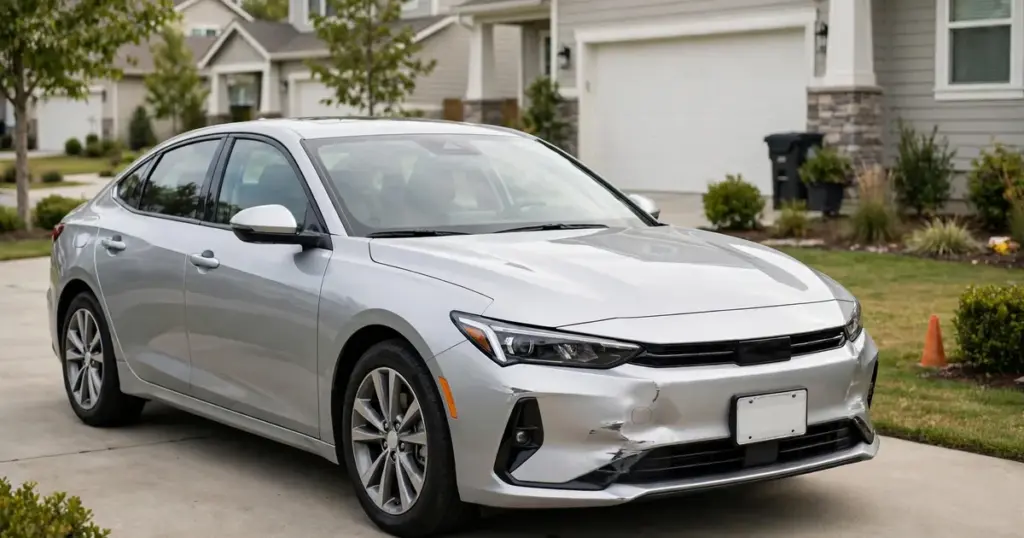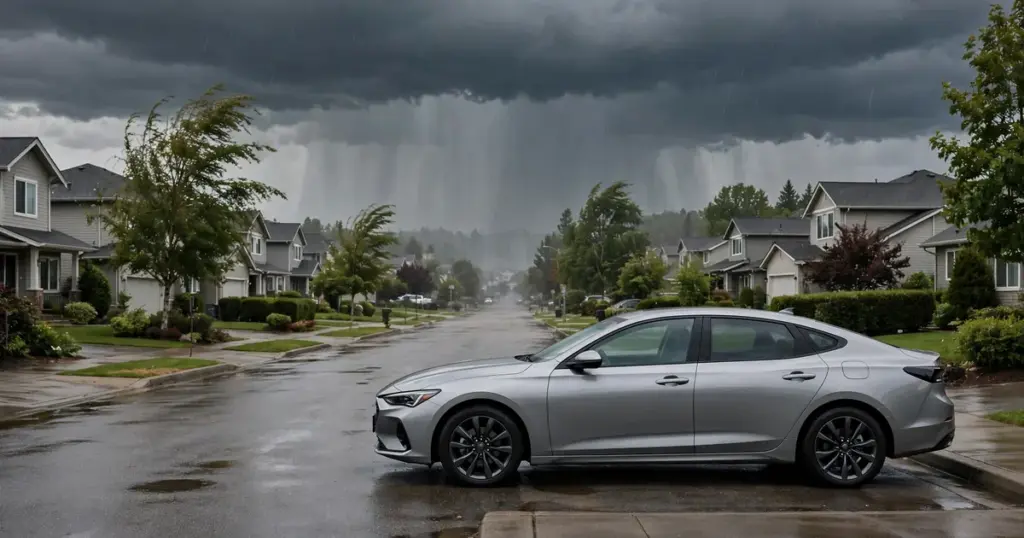
Does car insurance cover hail? Yes — hail damage falls under comprehensive coverage, the same part of your policy that handles flood and storm damage. If a hailstorm dents your car, floodwater ruins the interior, or wind drops a tree limb on the roof, comprehensive is what pays for repairs.
Hail Damage: How Coverage Works
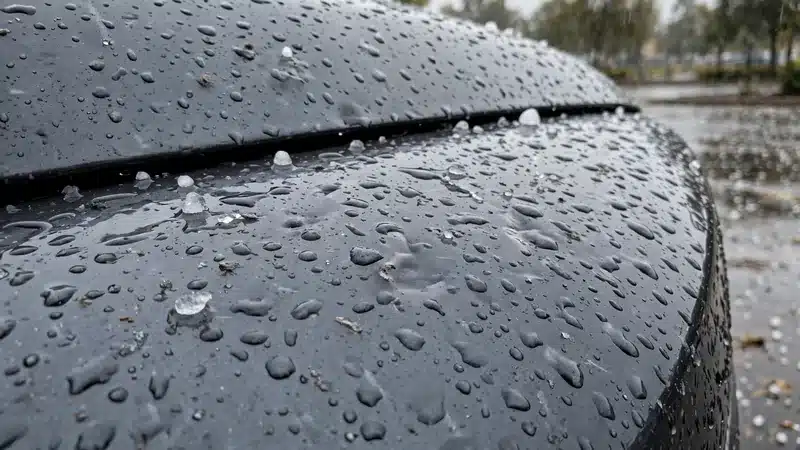
Hail is one of the most common weather claims in the US. A single storm can pepper a car with dozens of dents across the hood, roof, trunk, and doors. Comprehensive coverage pays to repair that damage, minus your deductible — whether that means paintless dent repair or full panel replacement.
One thing drivers often miss: widespread hail damage is almost always worth claiming, because multi-panel repair costs usually far exceed a typical comprehensive deductible. Get an estimate before deciding. An adjuster will inspect the car, count the damaged panels, and authorize the repair method — shops generally prefer paintless dent repair where possible because it preserves the factory finish.
After a major storm, insurers and shops can be swamped, so report the claim promptly and ask about the inspection timeline. If windows were broken, cover the openings right away to prevent secondary water damage, which the insurer may not fully cover.
Flood and Water Damage
Flood damage is covered under comprehensive no matter how the water arrived — a hurricane storm surge, a flash flood, an overflowing river, or a parking garage that filled during a downpour. If water got into your car because of weather, comprehensive responds.
Partial flooding
When water reaches the floorboards but stays below the dashboard, the car may be repairable. Expect the insurer to authorize drying, interior removal, electrical inspection, and replacement of soaked components like carpet, seats, and wiring harnesses.
Severe flooding
When water reaches the engine bay, dashboard, or roofline, the car is very likely a total loss — water damages wiring, sensors, airbag systems, and the engine in ways that are unsafe and uneconomical to repair. The insurer then pays the car’s actual cash value minus your deductible.
The one gray area: driving into floodwater
Coverage can get complicated if you deliberately drove through a flooded road that was clearly barricaded or marked. Insurers can argue the loss was avoidable, so disputes are more likely — one more reason to turn around rather than test a flooded road. It is also simply dangerous: a small amount of moving water can carry a car away.
Wind, Trees, and Other Storm Damage
Comprehensive also covers the rest of what a bad storm can do to a parked or driven car:
- Falling trees and limbs — roof crush, broken glass, and body damage from a tree or branch that came down in wind.
- Wind-blown debris — signs, fencing, and construction materials thrown into the car.
- Tornado and hurricane damage — from shattered windows to the car being moved or rolled by the storm.
- Lightning — rare, but electrical system damage from a direct strike is a covered comprehensive loss.
The distinction that trips people up: if a storm blows your parked car into something, that is comprehensive — but if you are driving and lose control in wind or rain and hit a guardrail, the damage falls under collision coverage instead.
| Weather event | Covered? | How it is handled |
|---|---|---|
| Hail dents across the body | Yes — comprehensive | Dent repair or panel replacement, minus deductible |
| Floodwater in the interior | Yes — comprehensive | Drying and component replacement; severe cases totaled at ACV |
| Tree limb falls on the roof | Yes — comprehensive | Body and glass repair, minus deductible |
| Windshield cracked by flying debris | Yes — comprehensive | Glass repair or replacement (some policies waive the deductible for glass) |
| Slid off an icy road into a ditch | Collision, not comprehensive | Paid under collision coverage instead |
What Weather Coverage Does Not Include
Comprehensive is broad, but it has boundaries worth knowing:
- Gradual damage. Rust, mold, or water damage that developed over months from a leaky seal is maintenance, not a covered event. Coverage applies to sudden, specific weather incidents.
- Aftermarket parts beyond basic equipment. A standard policy covers the car as equipped from the factory. Expensive custom wheels, sound systems, or lift kits may need scheduled additional coverage — check before storm season.
- Personal belongings. As with theft claims, items inside the car damaged by floodwater are generally not covered by auto insurance.
- Loss of use. A rental car while yours is in the shop is only covered if you added rental reimbursement to your policy.
- Damage from neglect after the event. If hail breaks your windows and you leave the car open in the rain for a week, the insurer can reduce the payout for the avoidable water damage.
How Weather Claims Are Valued
For repairable damage, the adjuster writes an estimate based on prevailing local labor rates and parts prices, then the shop restores the car to pre-storm condition. You can choose your own repair shop — you are not required to use the insurer’s preferred network, though network shops often carry a workmanship guarantee backed by the insurer.
For total losses, the payout is the car’s actual cash value on the day of the storm, minus your deductible. Flood totals are common because water damage to modern electronics is so hard to guarantee. If you disagree with the valuation, gather comparable listings for similar cars in your area and receipts for recent major work.
Weather claims rarely affect premiums the way at-fault accidents do, since a hailstorm is clearly outside your control. Rating rules vary by state and insurer, so ask your agent how comprehensive claims are treated on your specific policy rather than assuming.
Filing a Hail or Storm Claim
Weather claims move fastest when the documentation is good. Here is the sequence that works:
- Photograph everything before moving or cleaning the car. Capture dents in angled light, water lines on the interior, debris, and the surrounding scene. Photos taken immediately are the strongest evidence you will have.
- Prevent further damage. Cover broken windows, move the car out of standing water if it is safe, and do not start a flooded engine — starting it can turn repairable damage into a destroyed engine.
- Report the claim with the details fresh. Call your insurer or file online, noting the date, time, and location of the storm. After a widespread event, expect longer wait times and ask directly about the inspection schedule.
- Get the inspection and the estimate. The adjuster documents the damage and authorizes repairs or declares a total loss. If the car is drivable and safe, you can usually keep using it while you wait for parts.
For the complete process from first call to final check, see our guide to how to file a car insurance claim.
Protecting Your Car From Severe Weather
You cannot control the weather, but you can control the exposure:
- Use covered parking. A garage or carport is the single best defense against hail. When a storm warning hits and you are out, a parking garage or even a gas station canopy beats an open lot.
- Consider a fitted car cover or hail blanket. Thick padded covers will not stop the largest hailstones, but they meaningfully reduce damage from the far more common small-to-medium stones.
- Know your flood risk. If your street or garage floods in heavy rain, move the car to higher ground before the water rises — once water reaches the doors, the damage is done.
- Review your deductible before storm season. A high deductible saves on premiums but stings on a hail claim. Where hail is frequent, a lower comprehensive deductible can pay for itself with a single storm.
Frequently Asked Questions
Does car insurance cover hail damage if I have a high deductible?
Yes, but the deductible comes off the top of every payout. With a $1,000 deductible and $2,500 in hail repairs, you receive $1,500. If the repair estimate is close to or below your deductible, it makes more sense to pay out of pocket than to file.
Will my car be totaled if it floods?
It depends on how high the water reached. Water confined to the floor area is often repairable, while water that reached the dashboard, engine, or electronics usually means a total loss. Saltwater flooding is more likely to total a car than freshwater because of aggressive corrosion.
Does insurance cover hail damage on a leased car?
Yes, as long as the lease requires comprehensive coverage — which nearly all leases do. The repair process is the same, but tell the leasing company about significant damage, since they own the vehicle and may have their own requirements for repairs and documentation.
Is engine damage from driving through floodwater covered?
Usually yes under comprehensive, since the flood is the covered cause. But deliberately driving past barricades into a flooded road can give the insurer grounds to dispute the claim, and a hydrolocked engine is an expensive lesson. Never drive through floodwater you cannot see the bottom of.
Does filing a hail claim raise my rates?
Typically not the way an at-fault accident does — hail is a not-at-fault comprehensive event. Some drivers see no change at renewal. The exact effect depends on your state and insurer, so ask your agent how comprehensive claims factor into your pricing.
What to Do Next
Weather damage is one of the clearest cases for carrying comprehensive coverage — hail, flood, and falling trees are exactly the “other than collision” events it exists for. If you want the full picture of what that coverage includes, read what comprehensive car insurance covers, or see how it handles a different kind of loss in does car insurance cover theft. If a storm has already hit, start with our step-by-step guide to filing a car insurance claim.
This article is for general educational purposes only and is not insurance, legal, or financial advice. Coverage rules and rates vary by state and insurer.